Officer K goes to Sapper's farm to retire Sapper, where he finds the chest. Sapper tells K that he has never "seen a miracle." This scene shows the deserted territory of California in 2049. Colors are muted, grey.

Upon returning from missions, Officer K undergoes "baseline tests." Shows the dystopian, technological world.
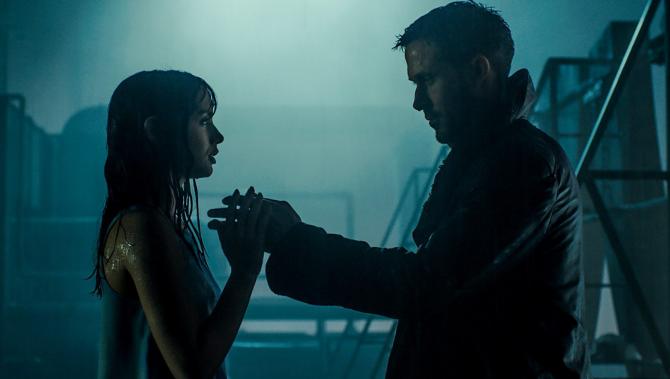
Officer K has relationship with Joi, and buys her an Emulator. This allows her to become more "real" and allows K to take her with him when he leaves the house.
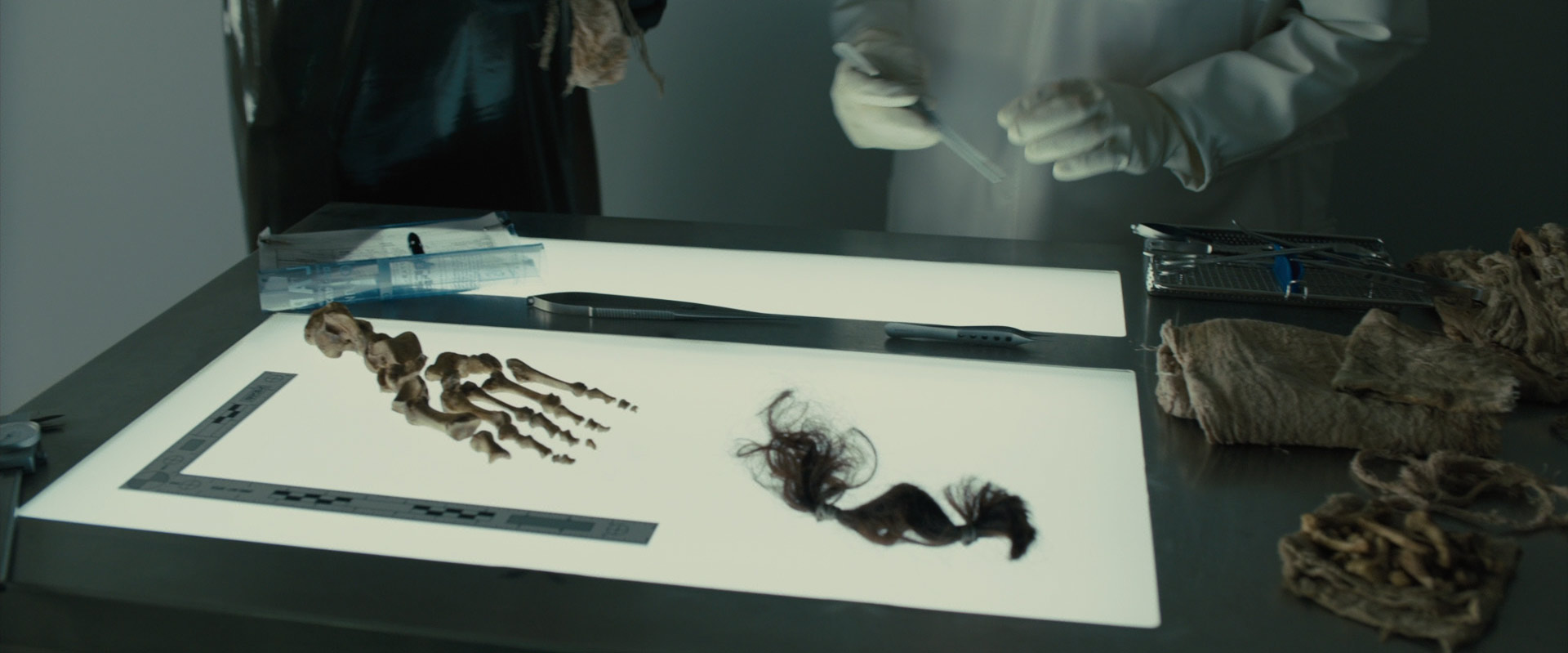
The chest that was found in Sapper's yard is examined, and a skeleton of a Replicant woman is found. It is revealed that the woman died in childbirth, prompting Officer K to get a new mission to find the Replicant child.
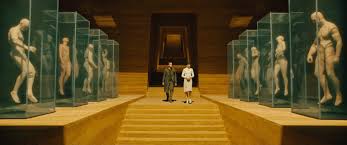
Officer K goes to Wallace Company, where he learns about Deckard from the files that Luv shows him.
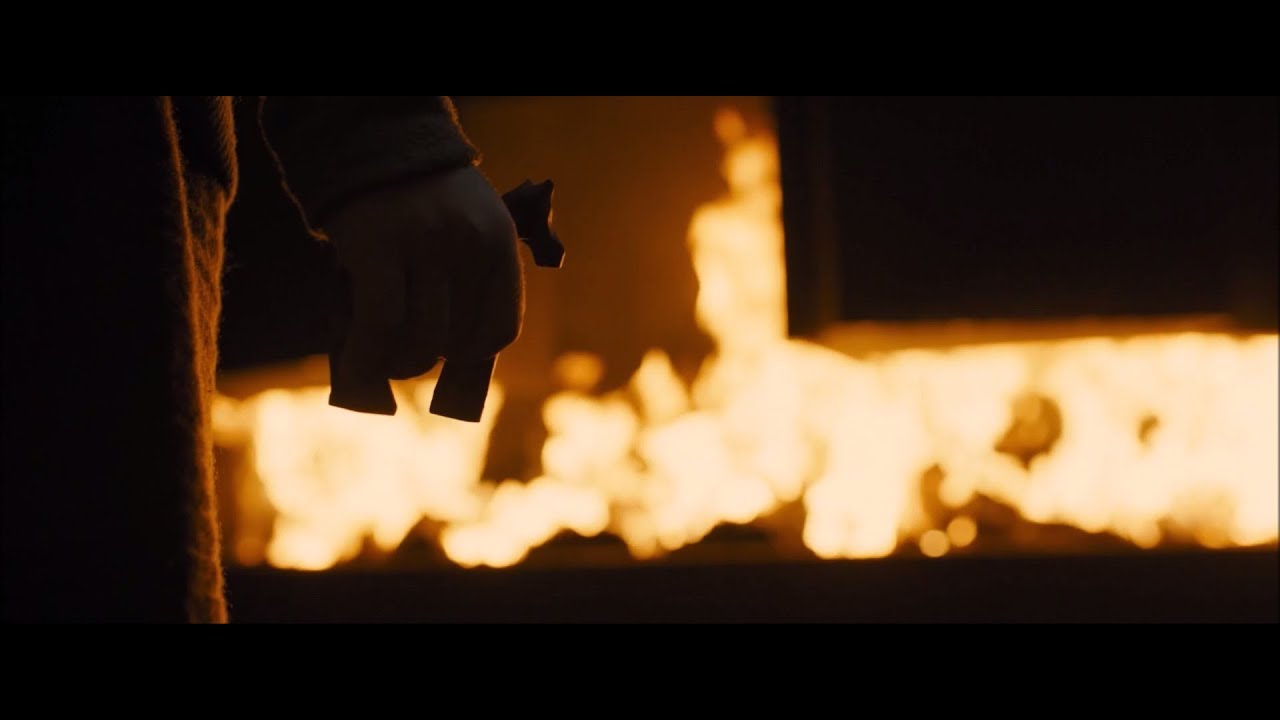
Officer K recalls a vivid "childhood memory" in which older boys at the orphanage chase him for a toy horse. The toy horse has a date carved in the bottom, which serves as the clue he uses to start his search.
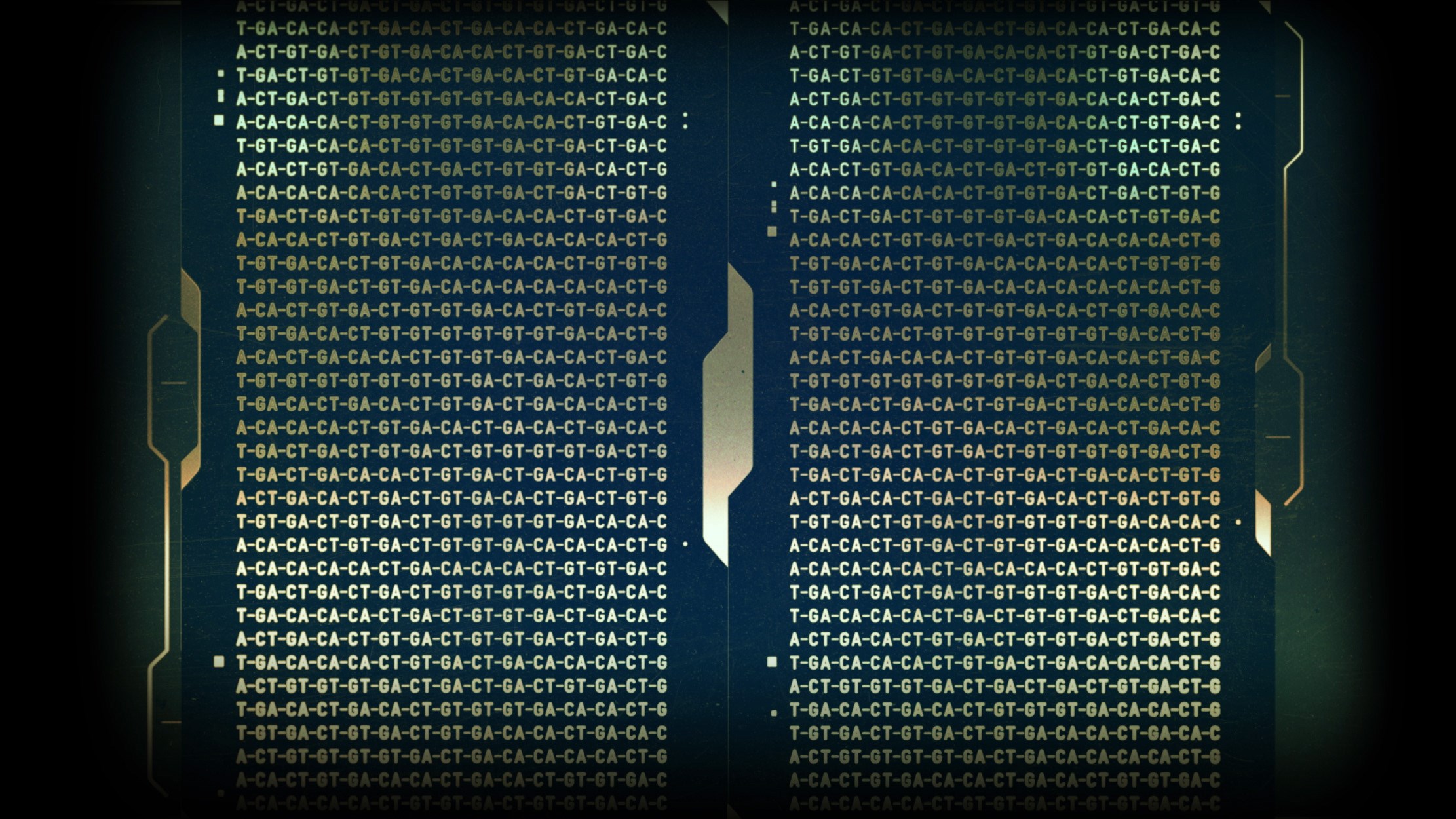
Using the date that is found carved on the horse, Officer K looks through the DNA database, and finds the identical DNA records, causing some confusion.

Officer K visits Dr. Stelline, who creates implanted memories for Replicants. He inquires about his childhood memory, and Dr. Stelline confirms it was real, leading K to believe that he is the Replicant child.


Officer K learns about Deckard and Rachael by talking to Deckard.

Luv tracks Officer K and finds Deckard, taking Deckard in order to find the Replicant child. Officer K is helped by Freysa and the other Replicants, where he learns about the revolution behind the Replicant child.

Officer K realizes that Dr. Stelline is actually the Replicant child, and takes Deckard to meet his daughter.
Blade Runner 2049 serves as the sequel for the original 1982 film, Blade Runner. Officer K is a blade runner who goes to retire Sapper, when he finds a chest buried under a tree in Sapper's yard. The chest holds the skeleton of a woman replicant, who died in childbirth. Previously believed that replicants could not have children, this starts Officer K's mission to find and retire the replicant child. As Officer K looks to find the replicant child, he looks to trace back old records, which have been destroyed. However, he traces back his own memories, which make him believe that he is the replicant child. However, in trying to discover his past, K discovers the truth, that he is not the replicant child, and that there is a bigger force of revolution behind the real Replicant child.
Blade Runner 2049 is set in a dystopian future, where humanity has started to die out, but is replaced by the Replicants. The visual language of the movie creates a separation between the two futuristic aspects of the setting of the movie. Bright, vivid colors with white and blues set the tone for the advanced, technological, digital age of the movie. On the other hand, the muted, faded grey and yellow colors show the ruins of what the human civilization once was. Alternating between these two aspects, the film explores the possibilities of the future, after the world as we know it is over. Through the experiences and emotions of Officer K and the other Replicants, the film explores what it means to be human, and what sets humanity apart from consistent, ruthless machine.
Descriptive Words - dystopian, futuristic, technological, humanitarian, revolutionary
Thesis -
In a technologically changing world, Officer K discovers a secret, making him believe that he is uncovering his past, when in reality, he discovers an even bigger revolution.

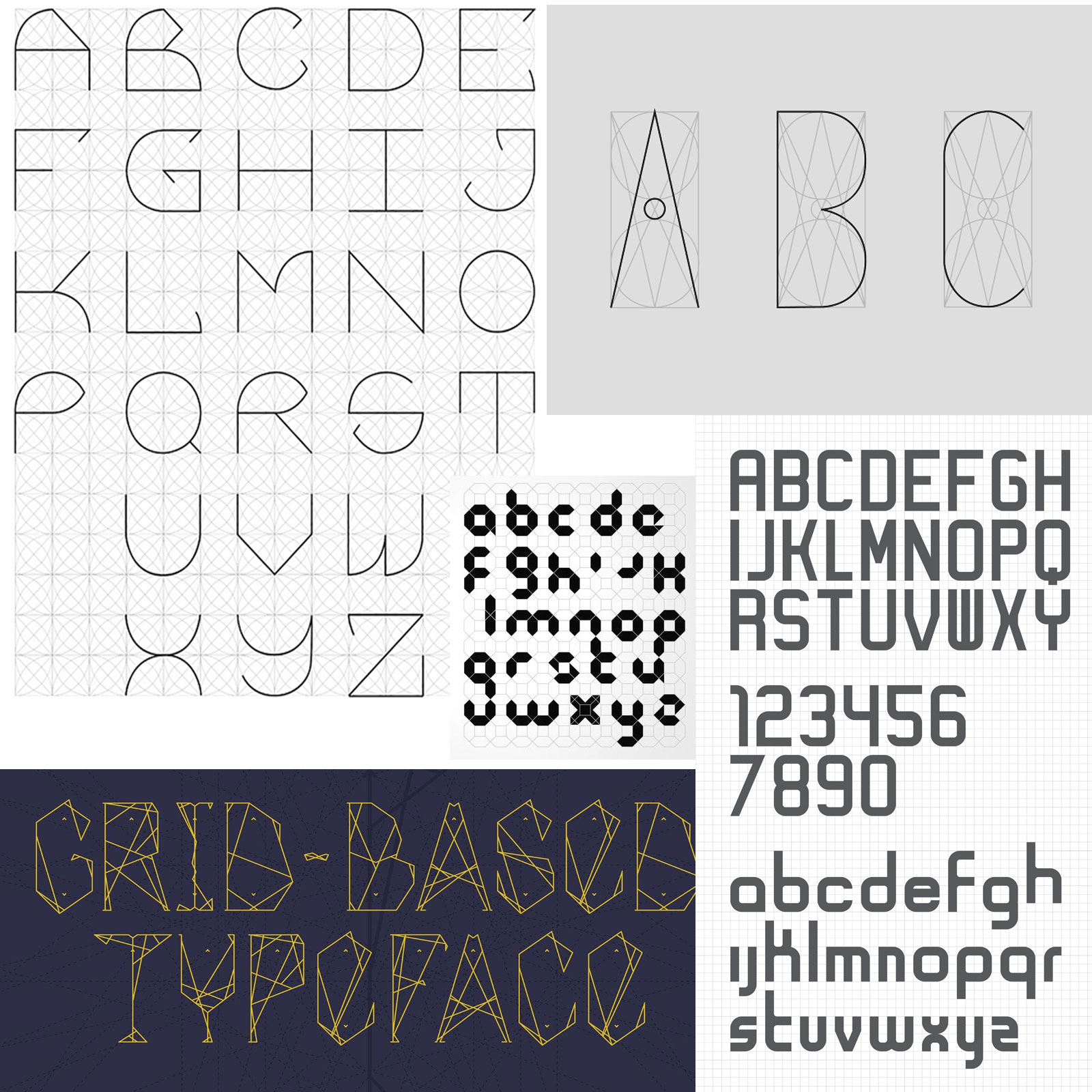









growing of color gradient

introduction of grid, complete, systematic

grid fades, random

image of tree




footage of rainfall, abstract


image of toy horse