This still shows the serenity that Okja got to live in when growing up in the mountains outside of Seoul. It is juxtaposed against images of malnutrition and imprisonment in the slaughterhouse.
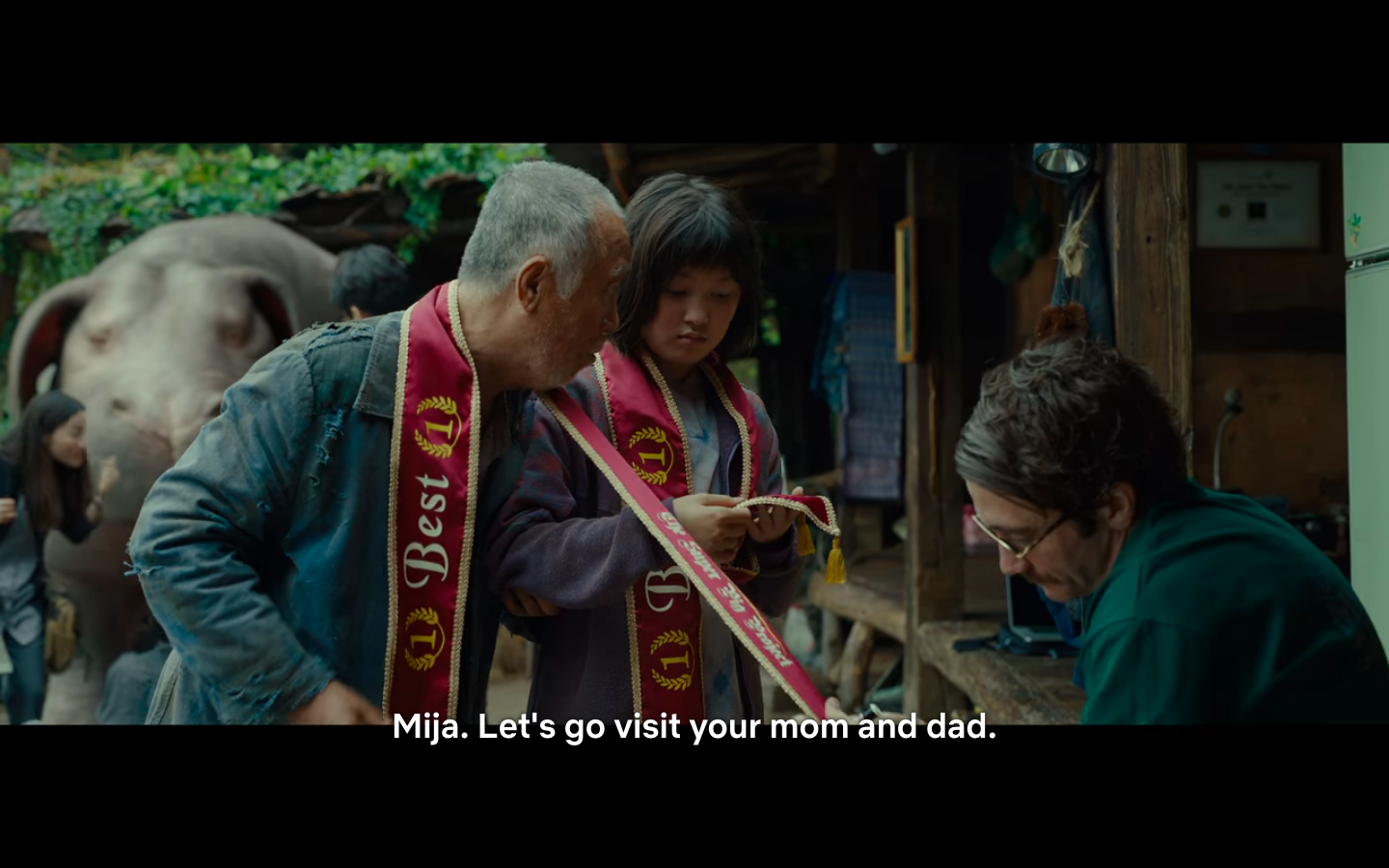
This image shows Mija's confusion as she looks down at her new sash for "Best Pig Farmer," while her grandfather is preoccupied with distracting her from what will happen to Okja. There is an imbalance between Mija and her grandfather's emotions and bonds with Okja.
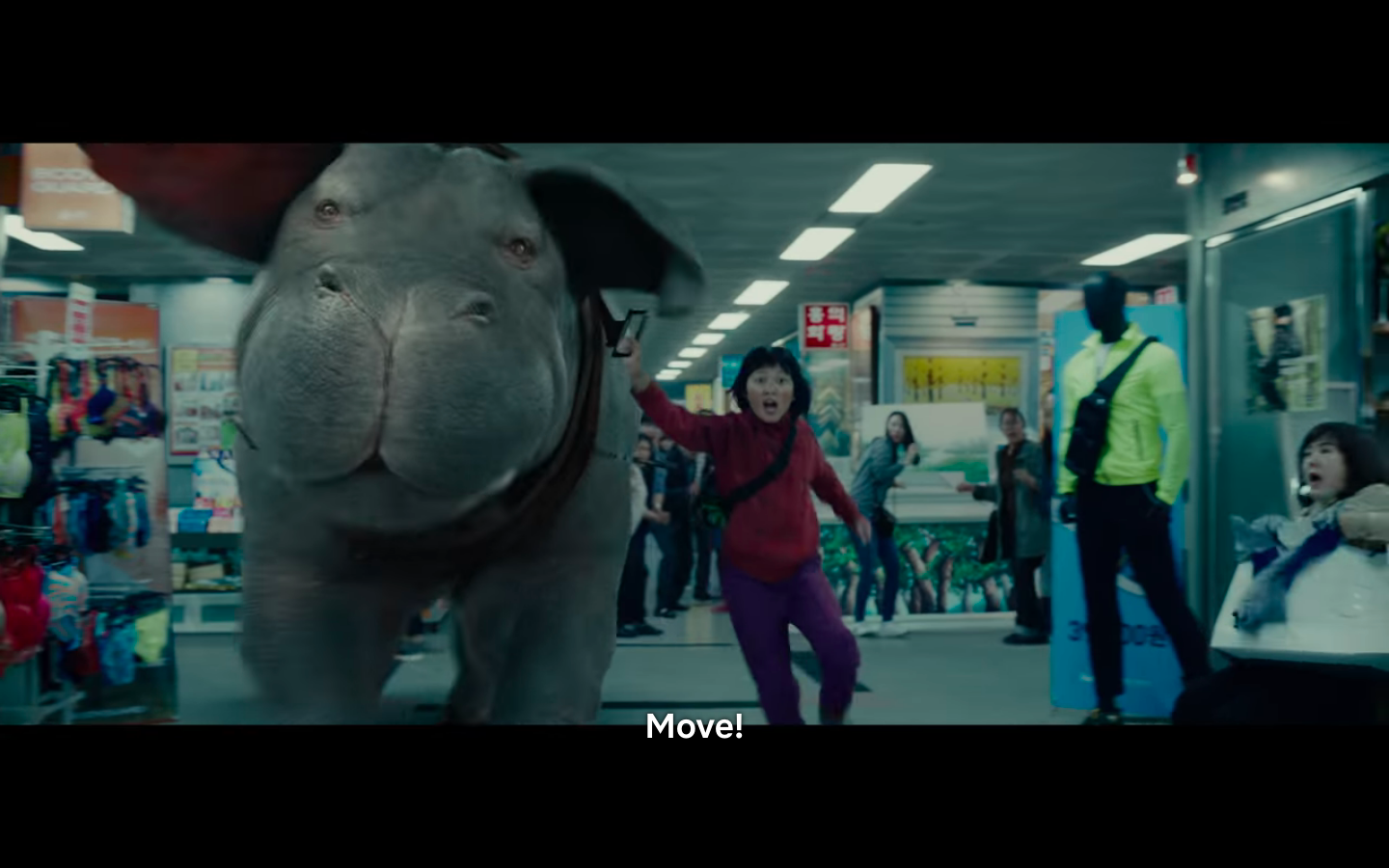
This still shows the evident panic on Mija and Okja's faces, as well as the people around them. The temperature of the image however is cool (blue), compared to the beginning part of the film, which indicates the introduction of a more somber topic and issue.

This image in particular shows the dark comedy that this film plays with. Mundo is shown, disappointed with having lost Okja; however, he and the tunnel are covered in Okja's feces.
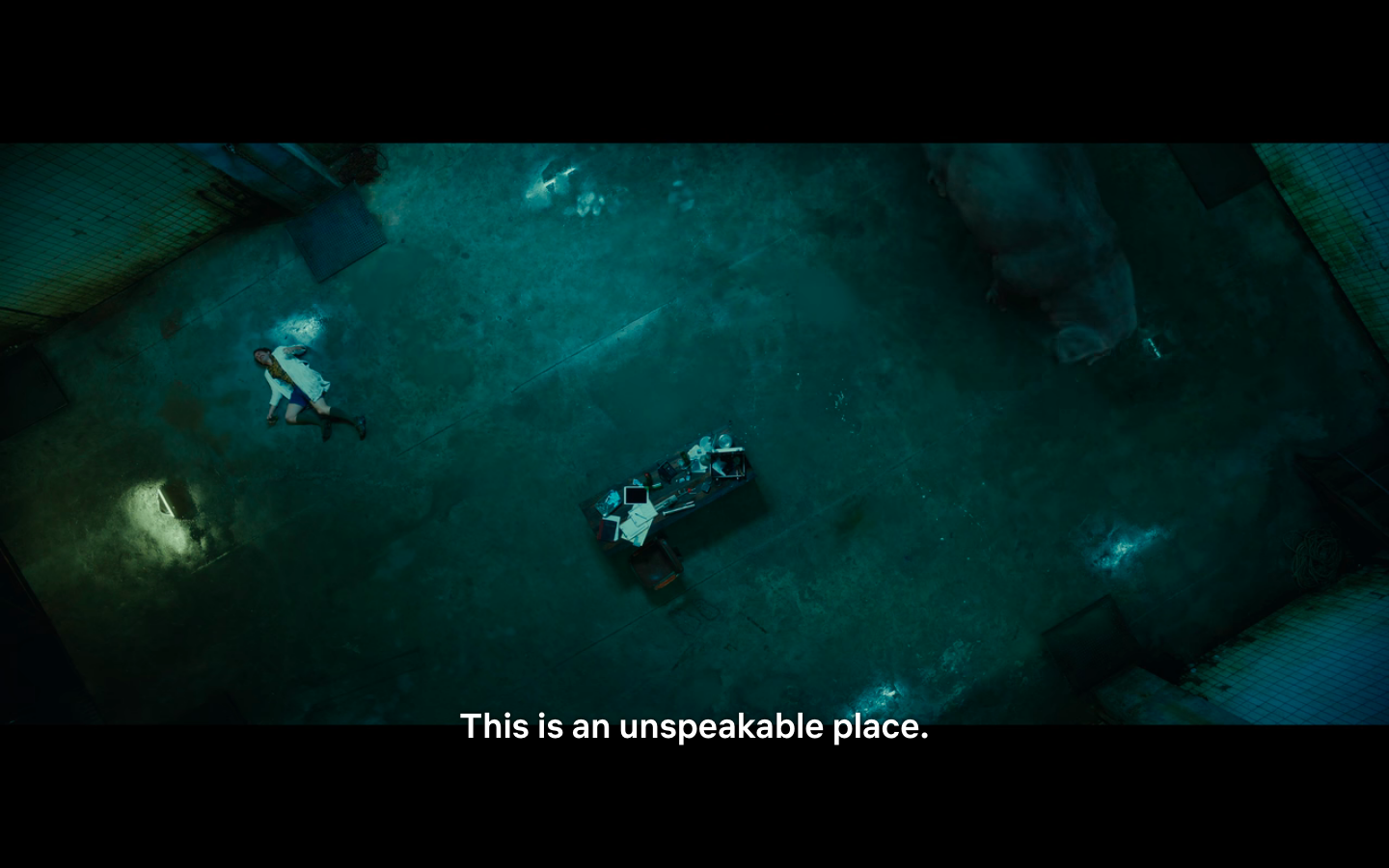
This still can be juxtaposed against the still of Okja going into the blue waters in the mountains. This is a still of Okja and Dr. Johnny in the room after Okja was forced to mate with a larger super-pig. Both Okja and Dr. Johnny feel defeated and have been abused by the Miranda Corporation.
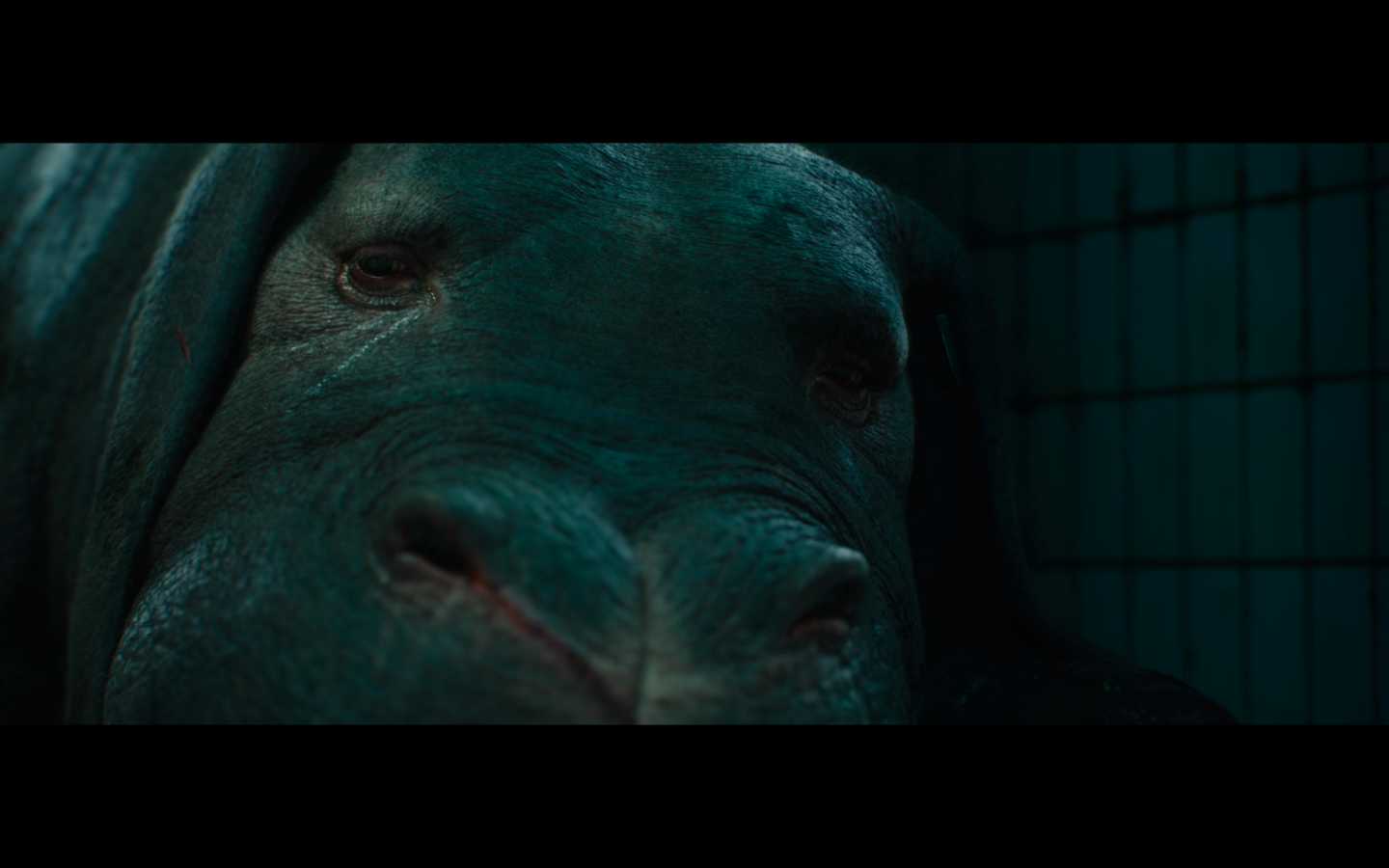
This is a powerful image of Okja crying. As an intelligent super-pig, she is capable of feeling emotions and defeat; yet she is treated as the object of a cruel scientific experiment. (The cruel experiments included forced mating and extraction of her meat while she is still alive.)
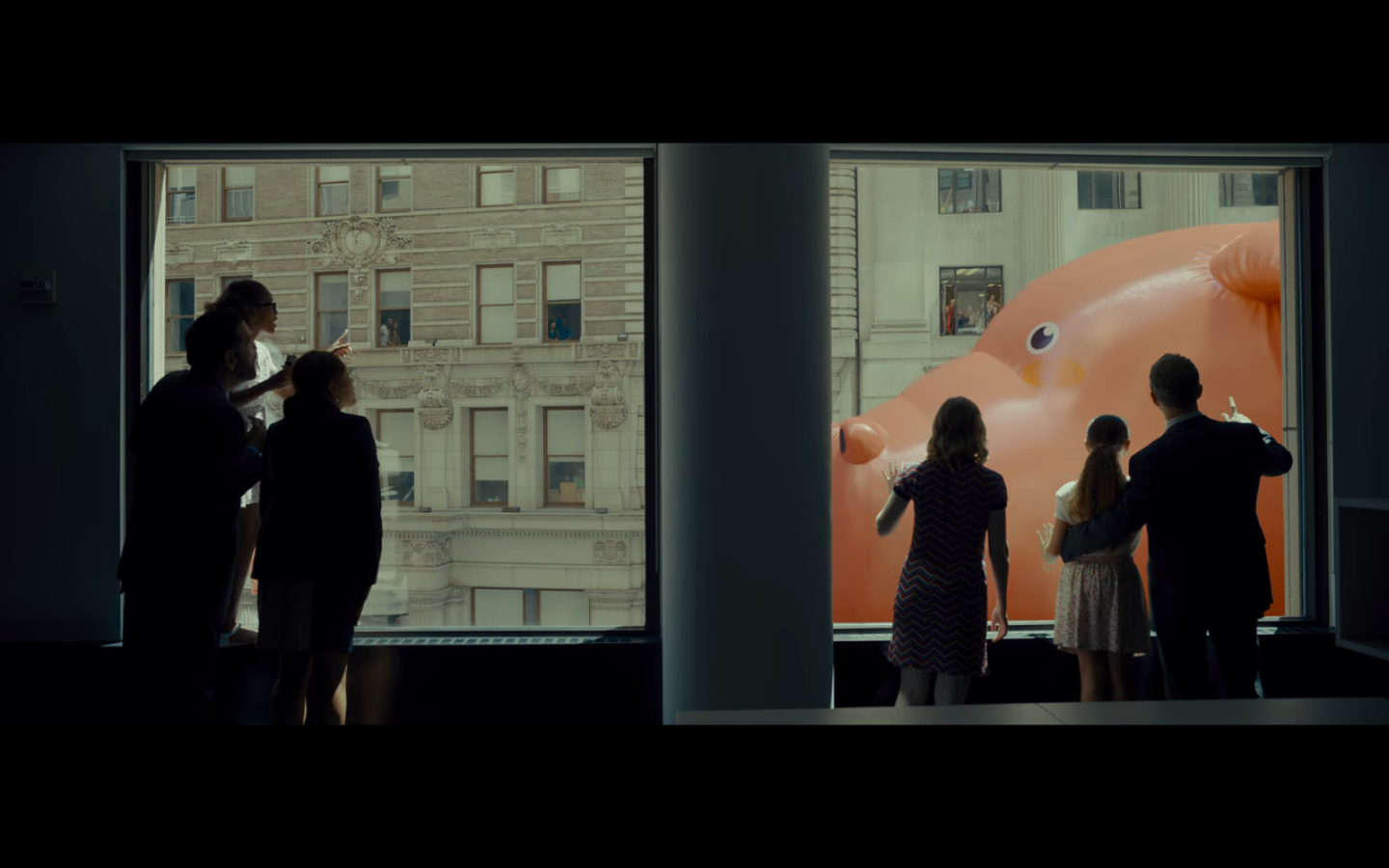
This is an image of the start of the Super-Pig Parade, portrayed as a very exciting and fun event, even when the audience knows what terrible implications the celebration has.
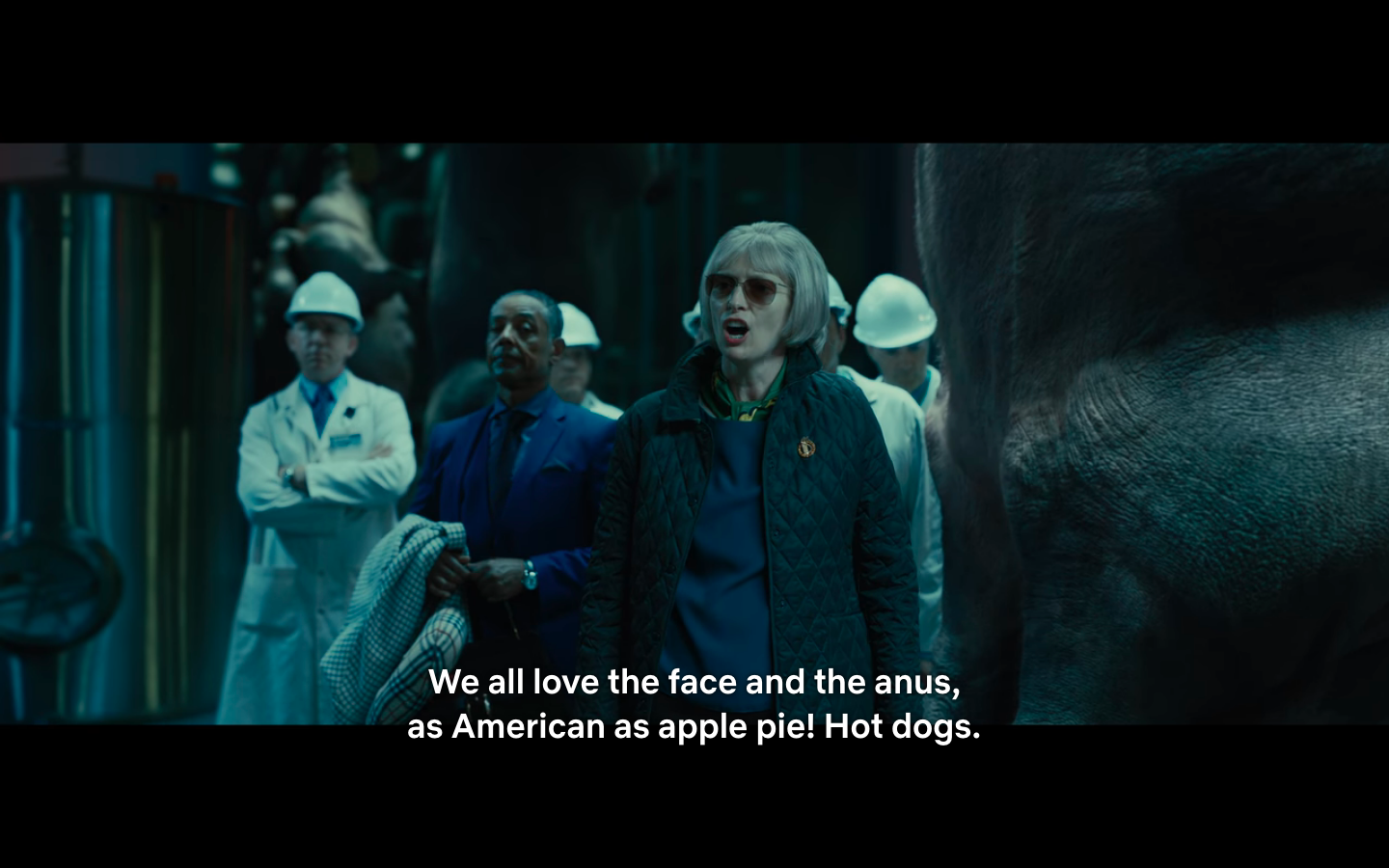
This is an image of Nancy Miranda, a corporate CEO, and her team fighting to preserve their business although they stand in a slaughterhouse. Miranda heartlessly wants Okja to be killed in front of Mija. This is an image of corporate/capitalist greed.
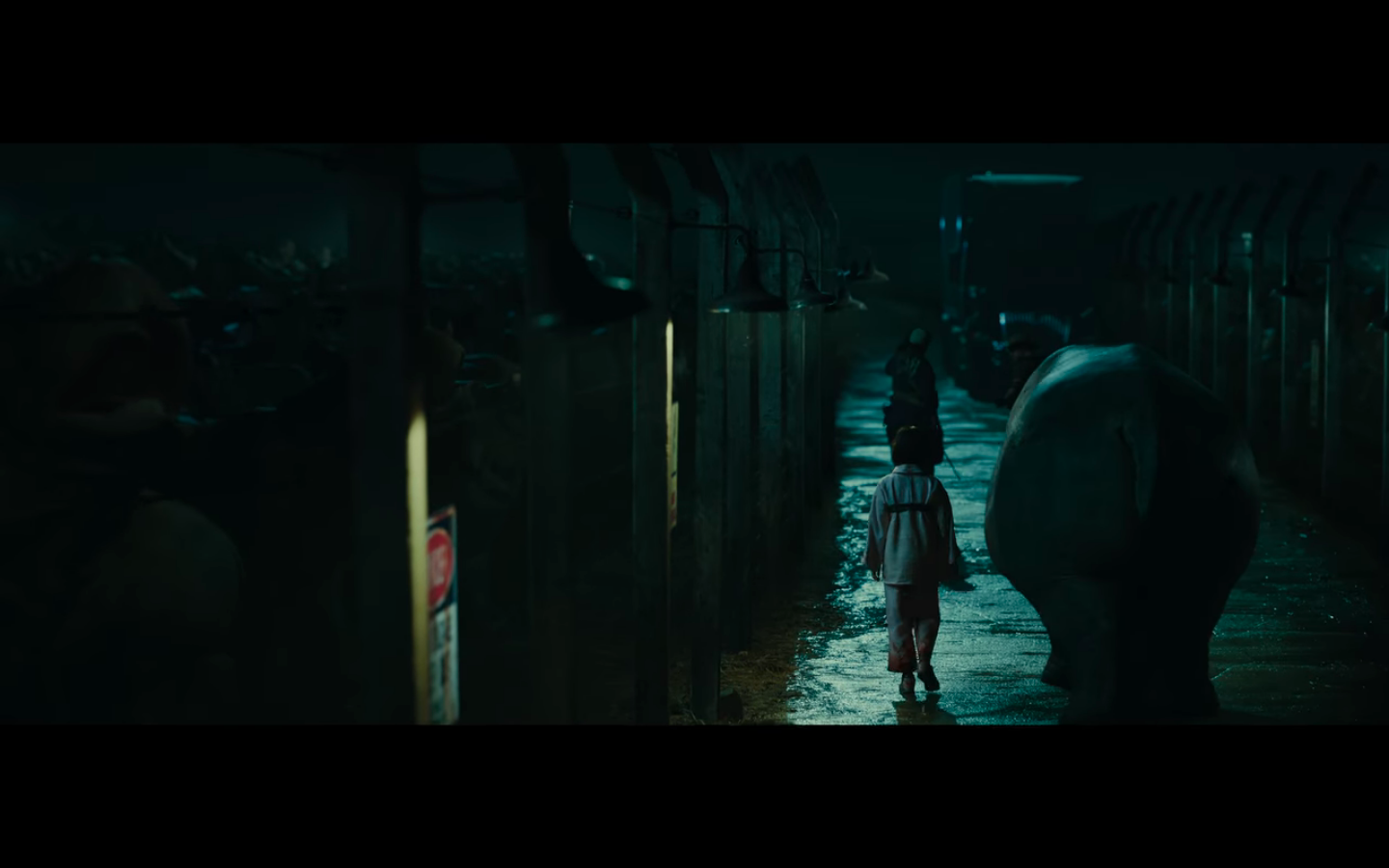
This is a still of Mija and Okja walking away from the slaughterhouse. Mija has bought Okja, which saves Okja's life, but the CEO sees it as a profit for her own super-pig industry.
In the movie "Okja," a young farmer girl (named Mija) in the mountains outside of Seoul, Korea has raised a super-pig called Okja, only for Okja to be taken away from her by the corporation who had created Okja through lab engineering. In her attempt to bring Okja home, Mija runs into the Animal Liberation Front, an organization intending to rescue animals from abuse by means of nonviolence. In the Animal Liberation Front's plans to expose corporation's unethical practices, Okja ends up being abused in a lab in New Jersey. The Animal Liberation Front now has the evidence from Okja to spread the news of the corporation and have their super-pig production shut down, but their plans to save Okja fail. Okja is about to be killed at the super-pig slaughterhouse when Mija offers to buy Okja with gold that she has. Although she saves Okja's life, her offer to the corporation is seen as the first profit that the corporation makes. The film is categorized as a "dark comedy," as the scenes are humorous and almost fun, yet the reality is horrifying.
The characters in the first half of the movie speak in Korean, as it takes place in Korea; those in the second half of the movie speak English, as it then takes place in New Jersey and New York. One could almost divide the film in half in this way, as the visual mood also differs in the two parts. In Korea, Okja and Mija are surrounded by green mountains, water, nonviolence and curious people. But in America, Okja and Mija are surrounded by concrete, metal bars, violence and angry policemen. Although Okja is saved at the end of the movie and goes home to Korea, a bigger problem lingers in the continuing success of super-pig production and slaughter in America.
The film highlights the issues of animal abuse in relationship to capitalism. As you watch the film, you are rooting for Okja and Mija to stay alive and together. But the bigger issue of the slaughter that will impact thousands of other super-pigs seen in the movie lingers, even when the movie ends on a positive note for Okja. It's similar to the hopeless sentiment of passing up a straw at the restaurant, and then seeing all of the garbage that gets tossed outside of the kitchen. This movie prompts audience members to question how much (or how little) power we have against harmful systems that are already powerful and in motion.
In a twisted way, "Okja" is a feel-good movie for those rooting for that one hero. But in a bigger picture, it really is about the horrors and greed of corporations, capitalism, ethical lab engineering, and animal abuse that will only cycle over and over for those who were not saved.
5 Words:
-capitalism
-unethical
-hopeless
-nonviolence
-international
"Okja" is a film about the horrific reality of corporate greed and the sacrifices that are made to save what matters most to you.