

2001: A Space Odyssey is widely regarded as one of the greatest films of all time. Released in 1968, the film’s cinematography, story, soundtrack, and special effects were ahead of its time; though it was initially released to mixed critic reviews, 2001 would go on to become a massively praised, supremely influential film that changed science fiction and cinema forever.
The film tells a science fiction story in several acts, beginning with a tribe of prehistoric primates that, upon discovering a giant black monolith, suddenly learn how to utilize bones as weapons to attack a rival tribe that has driven them away from their habitat. In the second act, the setting travels to millions of years after, where an astronaut is faced with the mission of investigating a mysterious monolith that has been discovered on the surface of the Moon.
The film’s next act takes up the largest breadth of the film’s plot and is perhaps the most iconic. Eighteen months after the second act takes place, we see an American spacecraft headed for Jupiter. Aboard the ship, several crewman are asleep in a state of suspended animation. The spacecraft’s computer, HAL 9000, enters in conflict with the pilots and scientists aboard, and becomes seemingly evil. While one of the pilots, Dr Frank Poole, is on a space walk outside the ship to repair a broken component, HAL severs his tether in an attempt to kill him. The other astronaut, Dr David Bowman, rescues him in an escape pod while Hal is shutting down the dormant crew’s life support. When the astronauts return, HAL blocks their entry because he knows they are planning to deactivate him. Bowman enters the ship via the emergency airlock and heads to deactivate HAL’s processor. HAL, an artificial intelligence with an uncanny human demeanour, begs Bowman to spare him. As HAL is shutting down, he sings the song “Daisy Bell” to Bowman. After HAL’s demise, a prerecorded message plays, informing Bowman that the mission’s objective is to investigate a radio signal coming from an artifact orbiting Jupiter.
When the ship arrives at Jupiter, Bowman discovers a monolith orbiting it. As his exploration pod approaches the monolith, it is sucked into a vortex through time and space. When this sequence comes to a stop, Bowman discovers himself in a neoclassical bedroom and views himself becoming older and older in different areas of the bedroom. As he becomes an old man laying in the bed, a monolith appears in front of him. Bowman reaches toward the monolith and is then transformed into the Star Child--a fetus illuminated in an orb of light floating in front of Earth.
Though the film leaves the answers to its meaning up to interpretation, the writers have suggested that the monolith is an energy device created by an alien race, used as a catalyst to help other species evolve. The film’s mood is dark yet magnificent, and feels more transcendental than any other film I have ever seen. It forces the viewer to confront questions of God and mortality, of the universe and the purpose of life. The tone is uncomfortable and otherworldly.
Stanley Kubrick is perhaps the most prolific director of all time when it comes to cinematography. His use of one-point perspective became a trademark in his films, and 2001’s use of color works to evoke feeling in the viewer--the dark red tones during the conflict scenes with HAL perfectly convey the sense of danger the protagonist is facing. The film's scenes contrast between nature, futuristic interiors, and magnificent shots of outer space depicting spaceships overshadowed by massive planets. The film’s set design uses architecture and interior design to travel through the human race’s time span in prehistory, neoclassicism, and in the future across the solar system.
An alien monolith appears throughout the cosmos to assist the human species in its evolutionary progression through space, time, and itself.
keywords: numinous, existentialist, sublime, evolution, terror
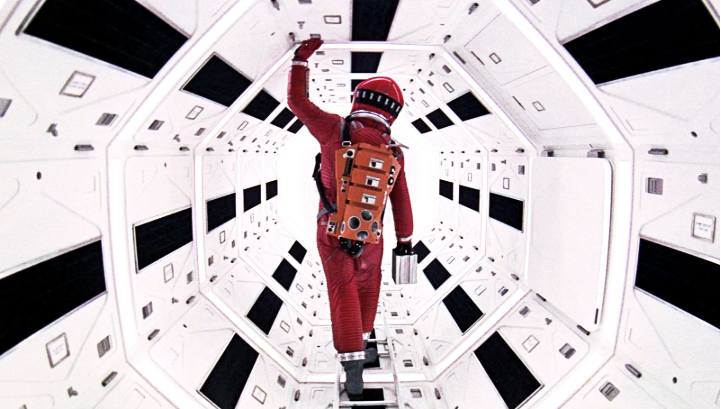
This scene is an example of Kubrick's signature use of one-point perspective.
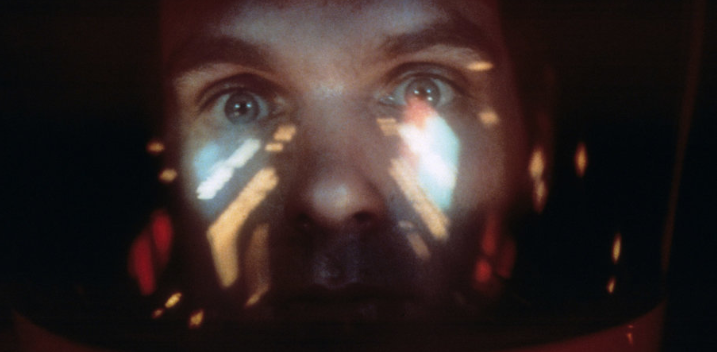
This scene shows the Star Gate (warping vortex of colorful lights and sound) reflected off Bowman's helmet
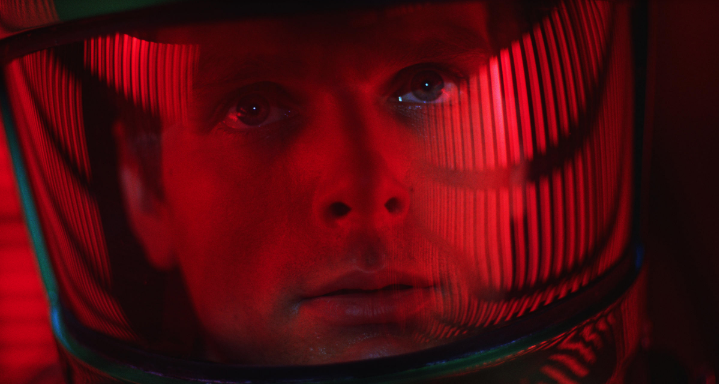
HAL 9000's circuitry can be seen reflected on Bowman's helmet

Bowman as he shuts down HAL's processor. The monochrome red is used throughout this act to convey danger.
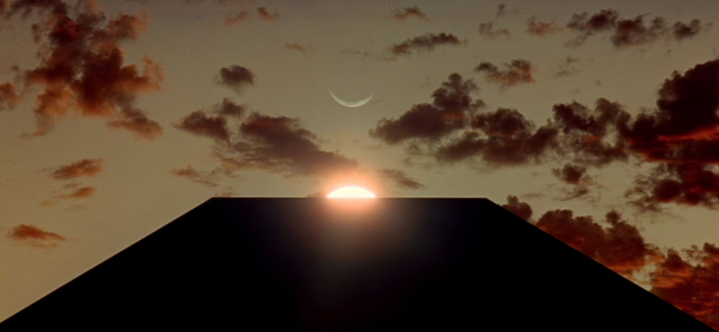
The monolith as the sun beams upon it in the first act.

These scenes in outer space are frequent in the film, where there is an absence of dialogue to make way for silence, or the film's classical score.

Bowman as an old man on his death bed, with the monolith appearing at the foot of the bed.
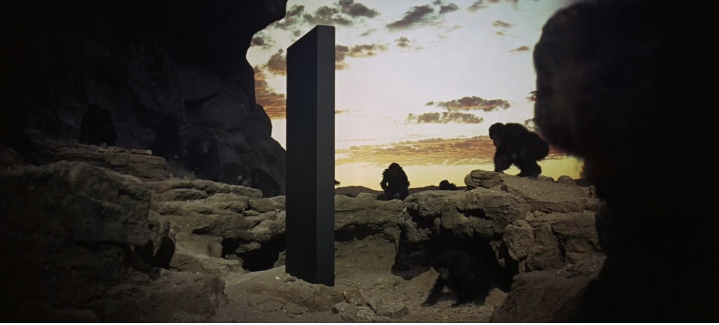
The monolith as it appears in the first act: the hominids stare in wonder.

Dave's evolution as the Star Child as it stares upon the Earth

HAL 9000's interface depicted next to Dave.

geometry / texture. most abundant colors of the film
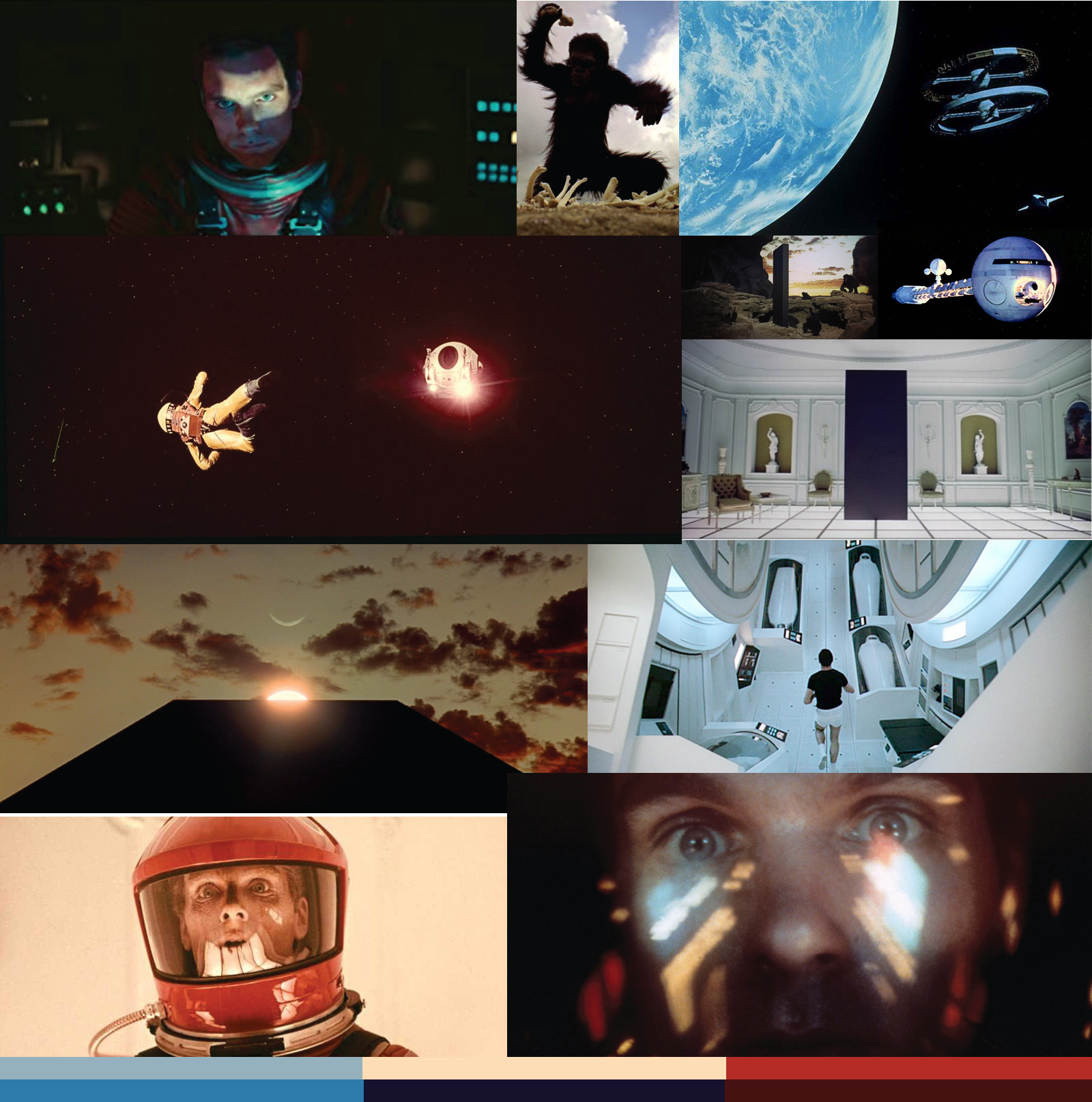
secondary color palette from film stills

1968 / space age era art
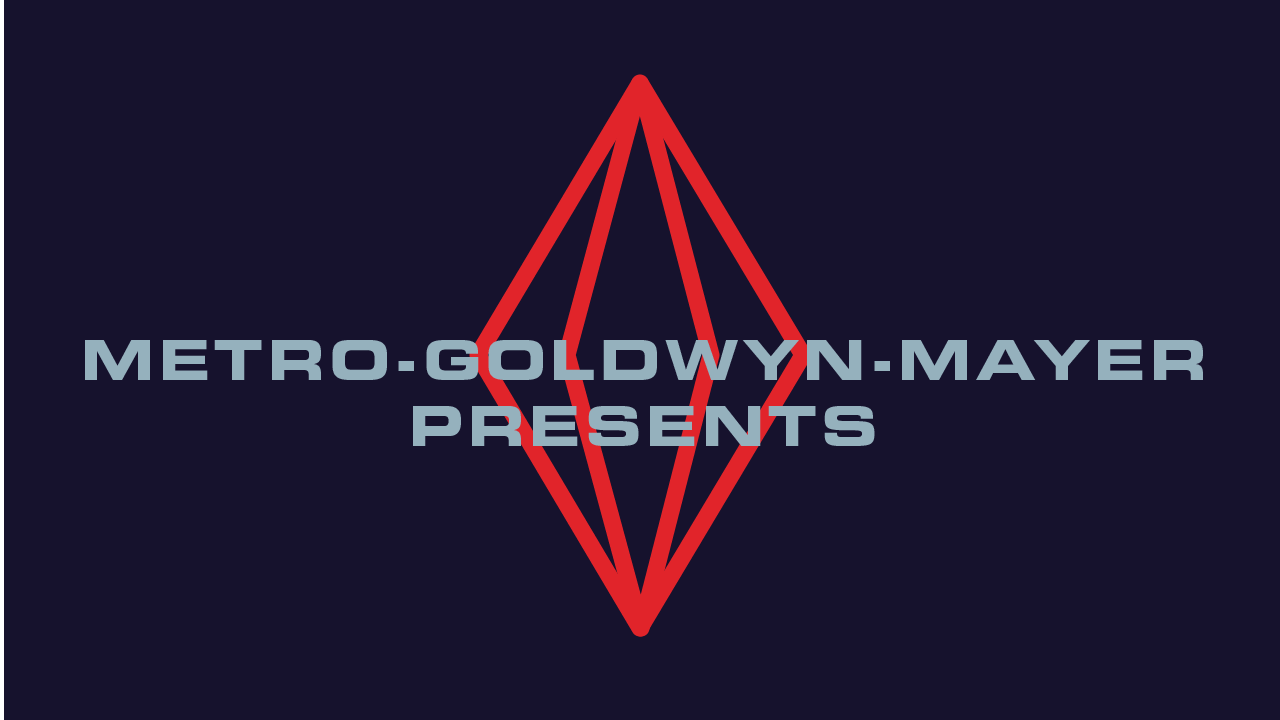


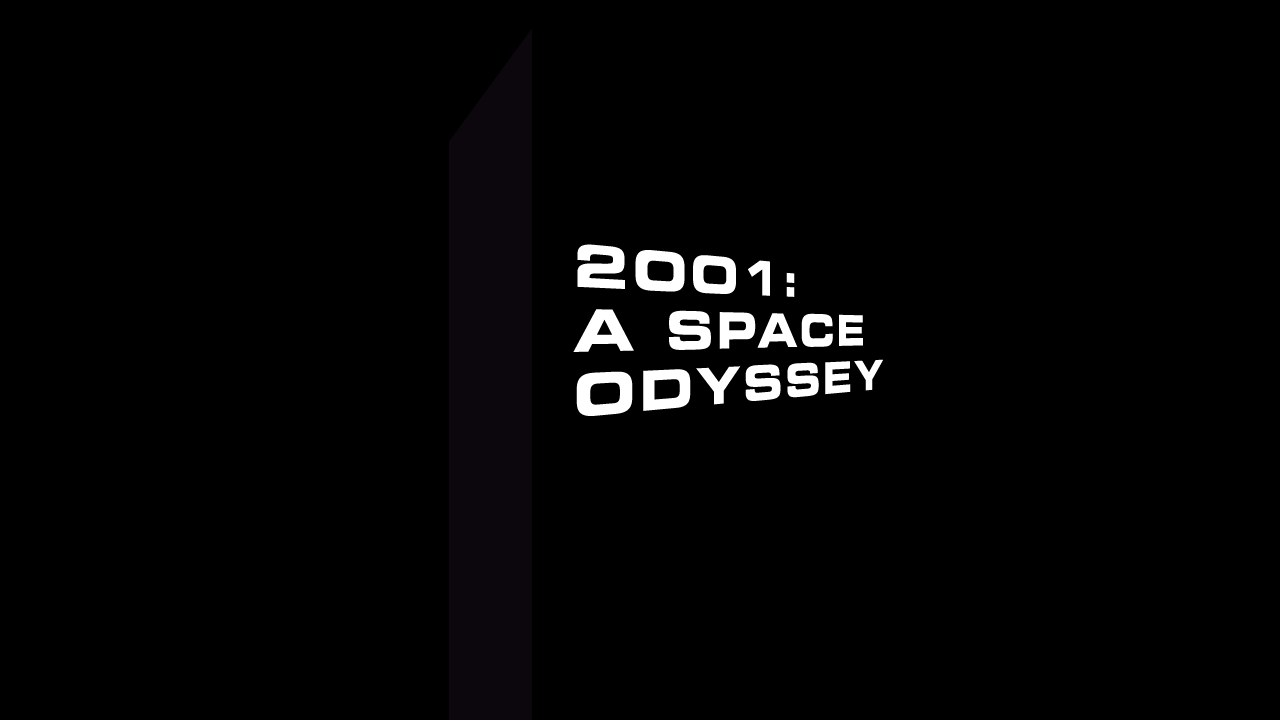







Title sequence begins with a rotating octahedron behind the MGM text. The octahedron is an allusion to the octahedrons that appear in the stargate sequence at the end of the film.

Text fades, octahedron continues to spin as it fades. Maroon-colored overlay fades in.

Stanley Kubrick text fades in with a mask travelling from right to left.

Red rectangular prisms represent HAL 9000's processor grid. Slide in from opposite sides, obfuscating/wiping away "Kubrick" text as they pass.

HAL 9000's processor takes up entire screen, fade to black.
Stargate sequence commences

Stargate begins slow, then speeds up until it is a rapid blur of motion

Stargate slows down, title text flies in

Title.

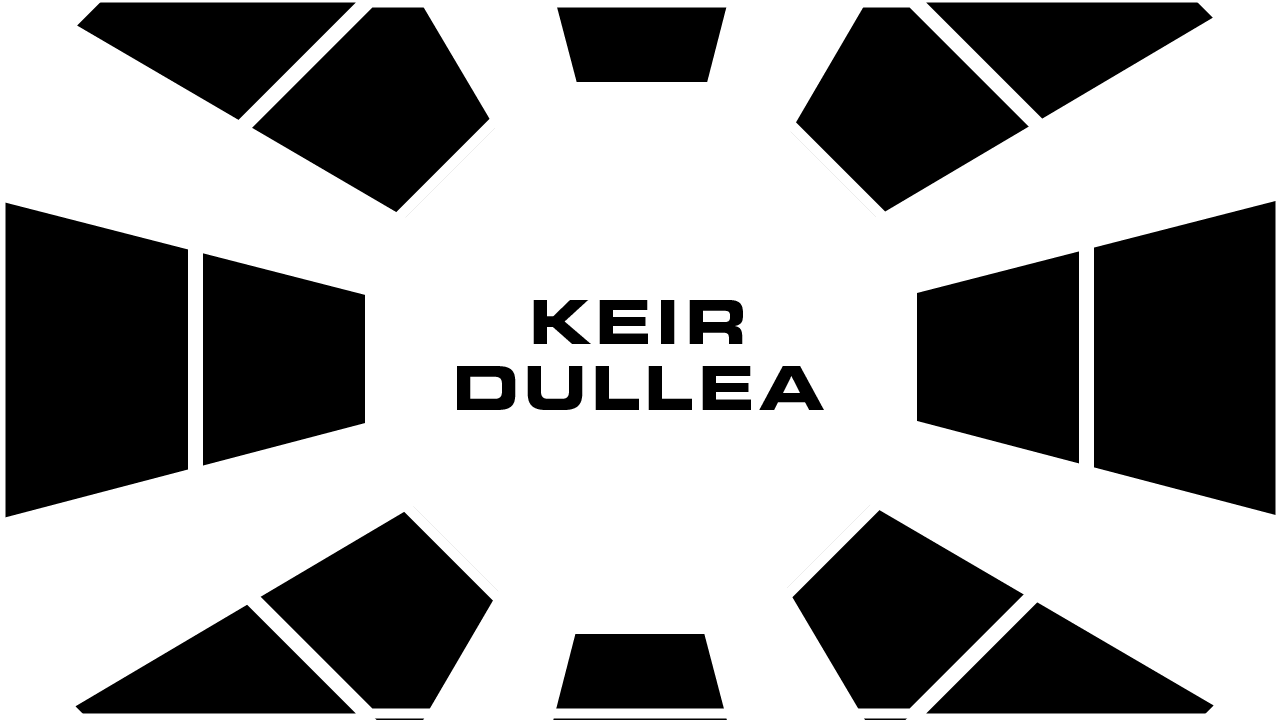
Keir Dullea credit. Shapes are the Discovery One's hallway, rotating counterclockwise to allude to antigravity scenes in beginning of film.

Red fades in. Allusion to the emergency airlock hallway that Dave enters after HAL murders Frank.

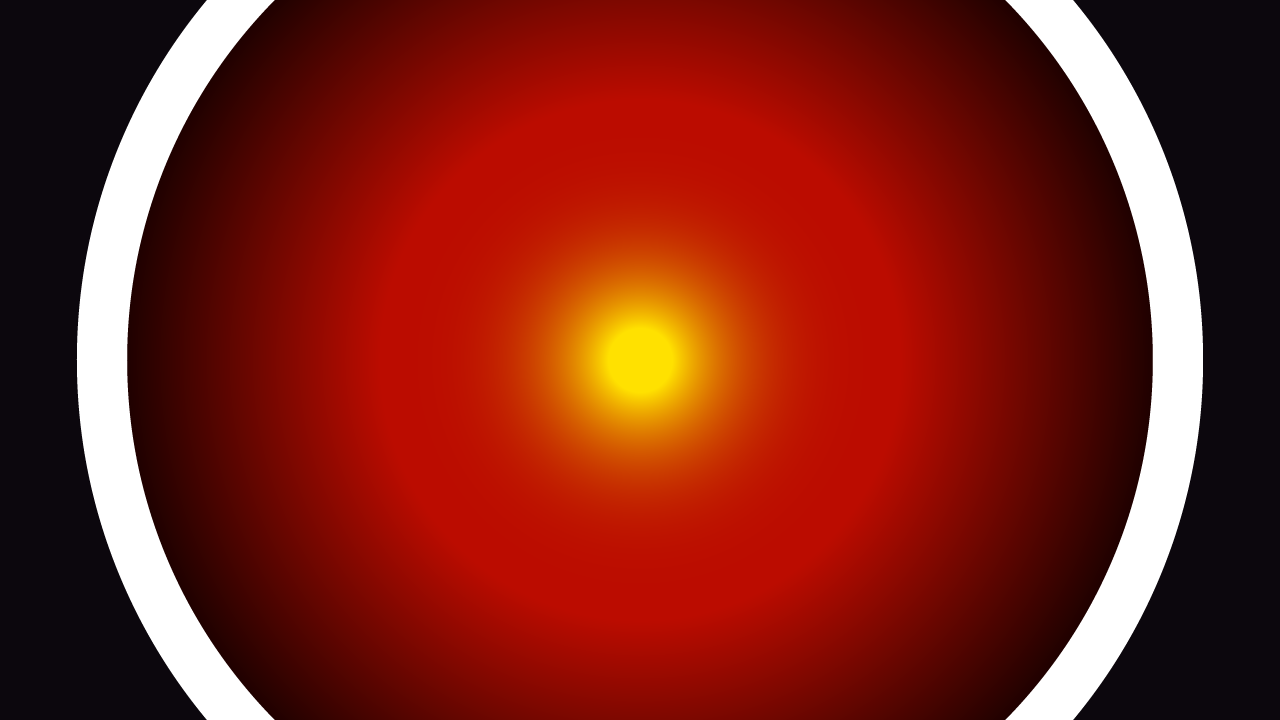
Center circle fades into yellow, symbolizing HAL 9000's light.
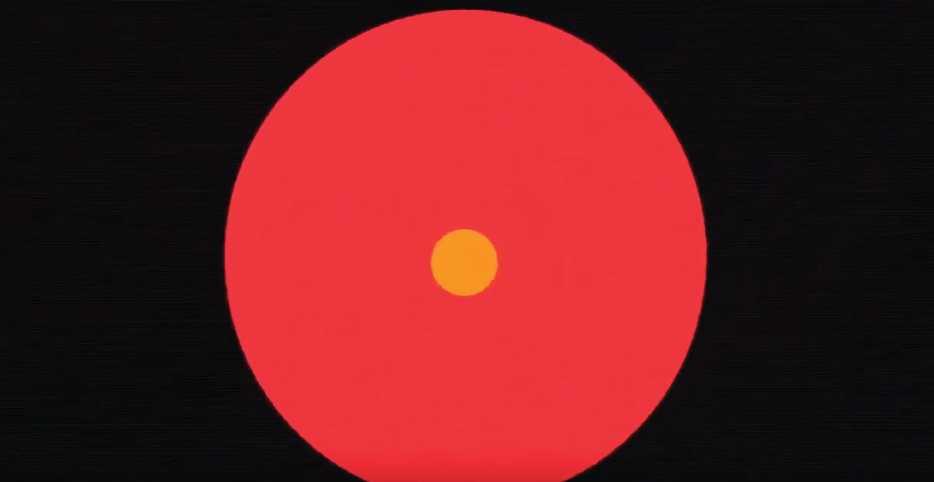
Red overlay shrinks into a circle
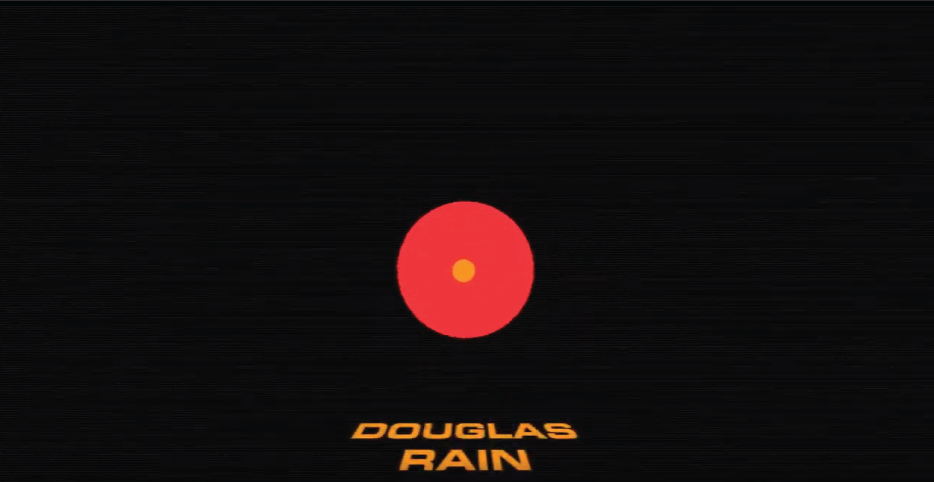
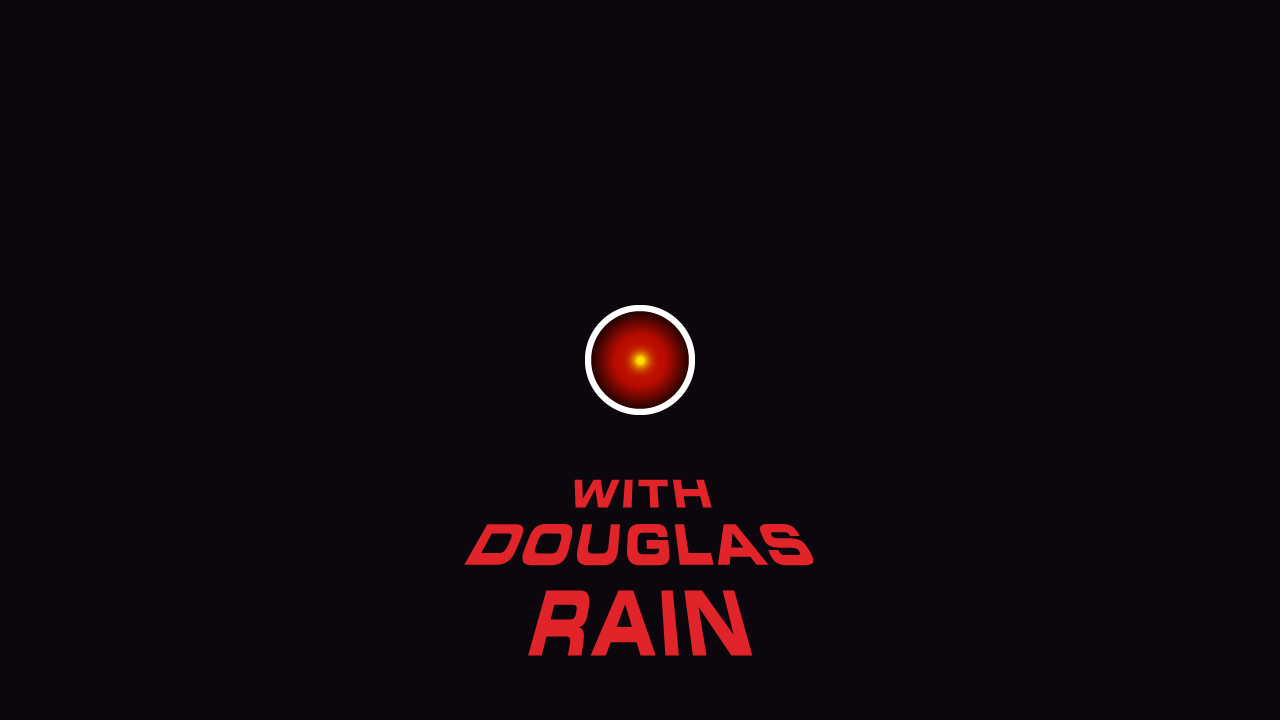
HAL's eye continues to shrink until it stops. Douglas Rain's name fades in with a mask from top --> bottom.

Douglas's name fades away. Black overlay shrinks into rectangle symbolizing the monolith. HAL's eye moves up and turns yellow. Symbolizes the scene in the beginning of the film where the sun rises over the monolith.
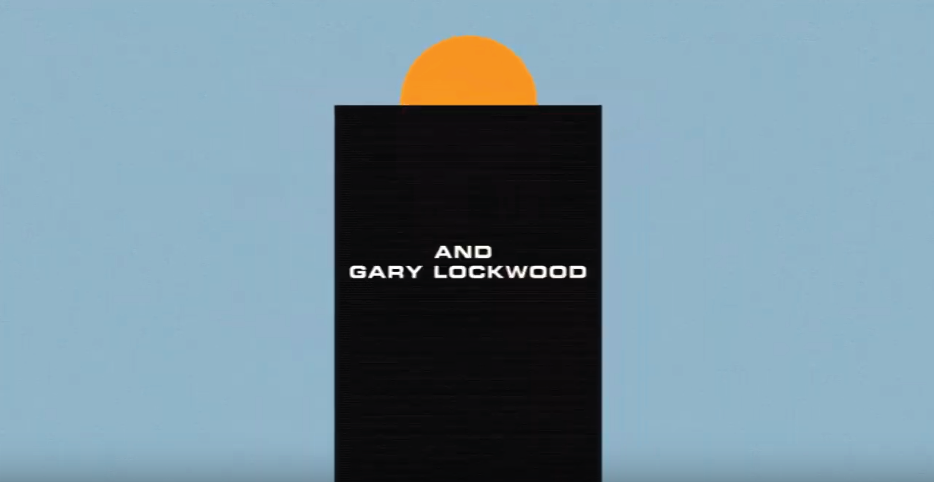
Gary Lockwood's name fades in.

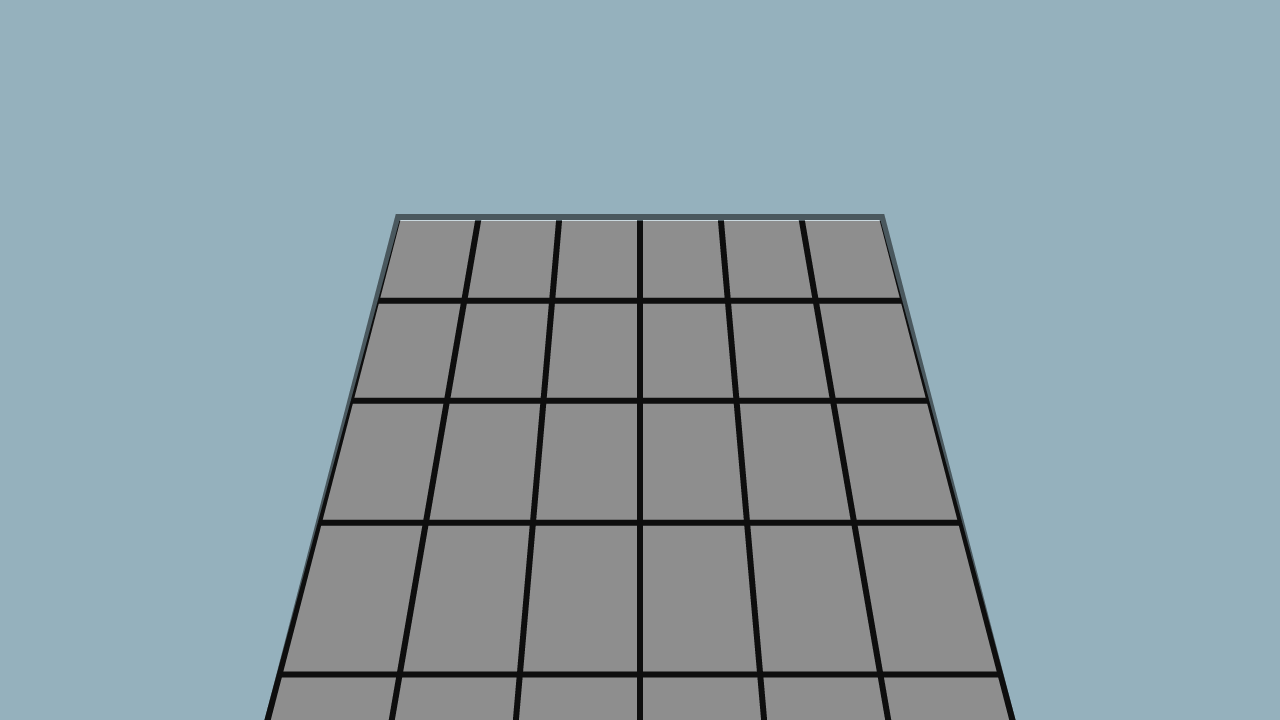
Text and sun fade out. Monolith shape transforms into the floor of the room at the end of the film, where Dave finds himself on his deathbed.

Screenplay credits pop in.