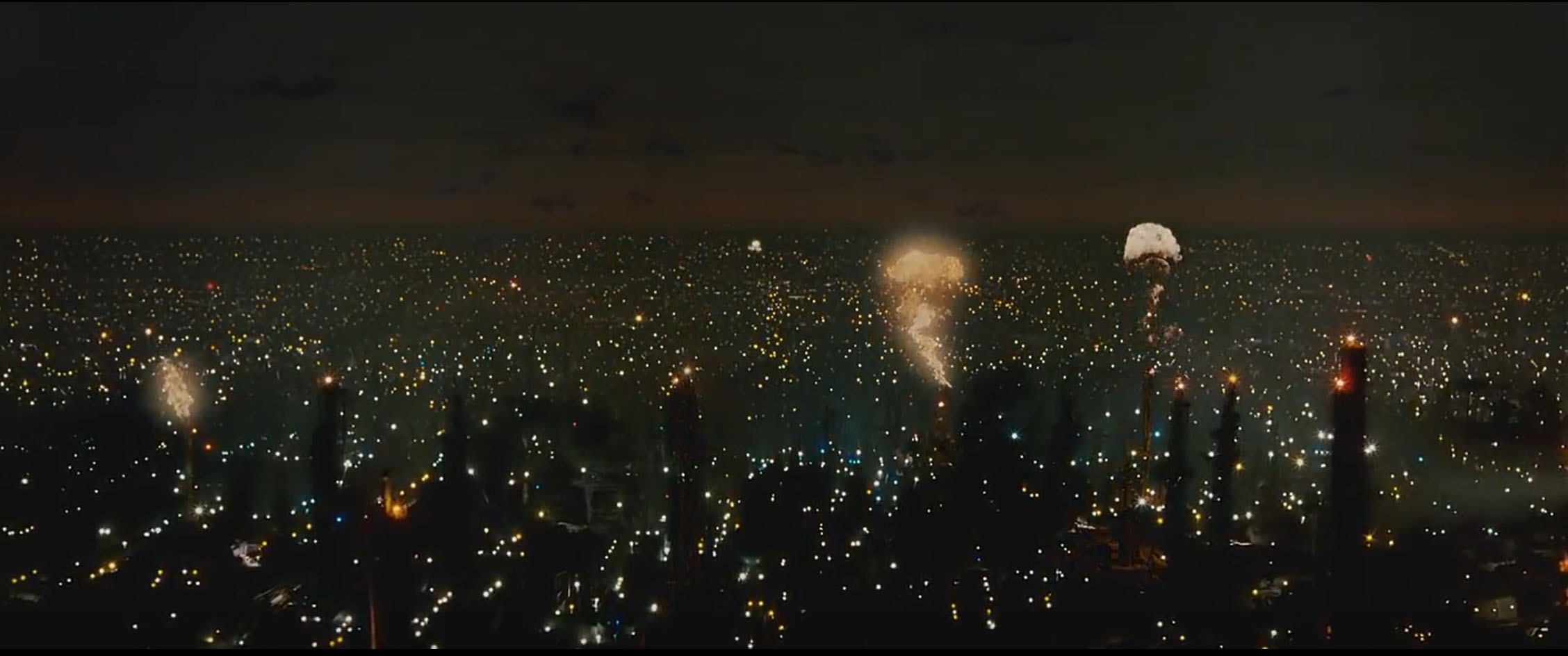
The Film starts off with an industrialized Los Angeles with many tall buildings that crowd the skies.

This is the first encounter of a Replicant in an interrogation scene. It makes the Replicants appear as a normal human; however after a couple of more questions the true power of the Replicant is known: his strength.
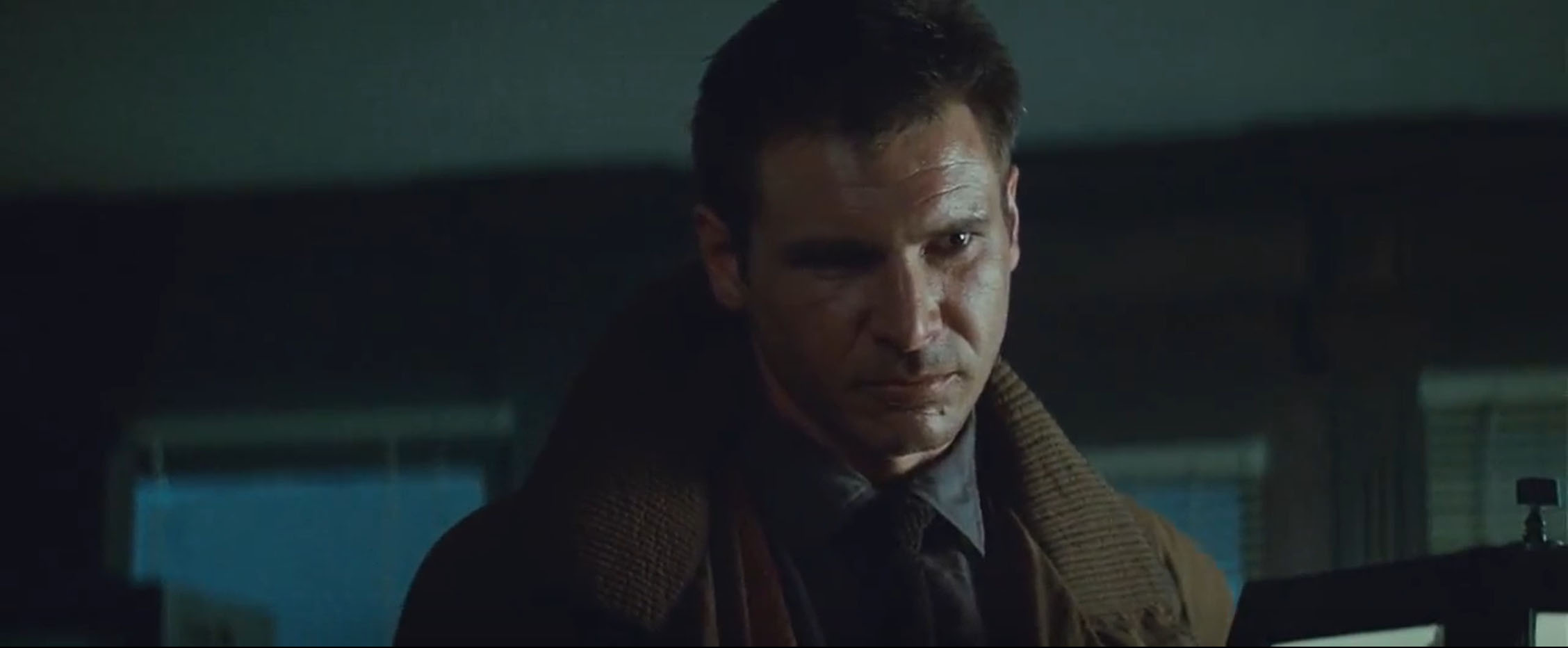
Deckard(Harrison Ford) is introduced as a retried Blade Runner; still, he is called in due to the invasion 5 Replicants that are Earthbound.

As Deckard goes to find clues as to where he could find the Repicants, he goes to the maker of the Replicants. He finds out that the Replicant maker is actually impanting fake memories into the minds of the Replicants to make them more human. This is also the first Replicant, Rachael, Deckard interrogates in the film.

This scene shows the dark atmosphere of the film. Deckard is gathering information on where these Replicants are from a crime scene.

This scene introduces the audience to the Replicant leader, Roy, and one of his henchmen, Leon, in this film. This scene appear as evil.

This scene depicts Racheal going to Deckard's home to convince him that she is not a Replicant, but Deckard proves her wrong. She becomes upset and leaves. This is the first instance Deckard actually feels bad for a Replicant.

This street scene depicts the dark and noir like theme for the film. It is always raining within the film

This scene depicts a Replicant, Pris, like a homeless person, and makes the viewer feel bad for her. J. F. Sebastian, a Replicant parts maker, walks by and takes her in. This scene humanizes the Replicants.

Deckard goes through a photo that he was given from the crime scene he search before. This scene depicts the advanced tech in the film: image enhancing by voice.

Deckard calls Rachael to say that he is sorry about earlier and wants to make up for it by going to a bar. She declines the offer. Deckard is starting to grow feelings for her.

Deckard finally finds a Replicant and hunts her down. He shoots her after a long chase through the rainy, dark, and crowded streets of Los Angeles.He shoots her as she breaks through 2 glass displays.
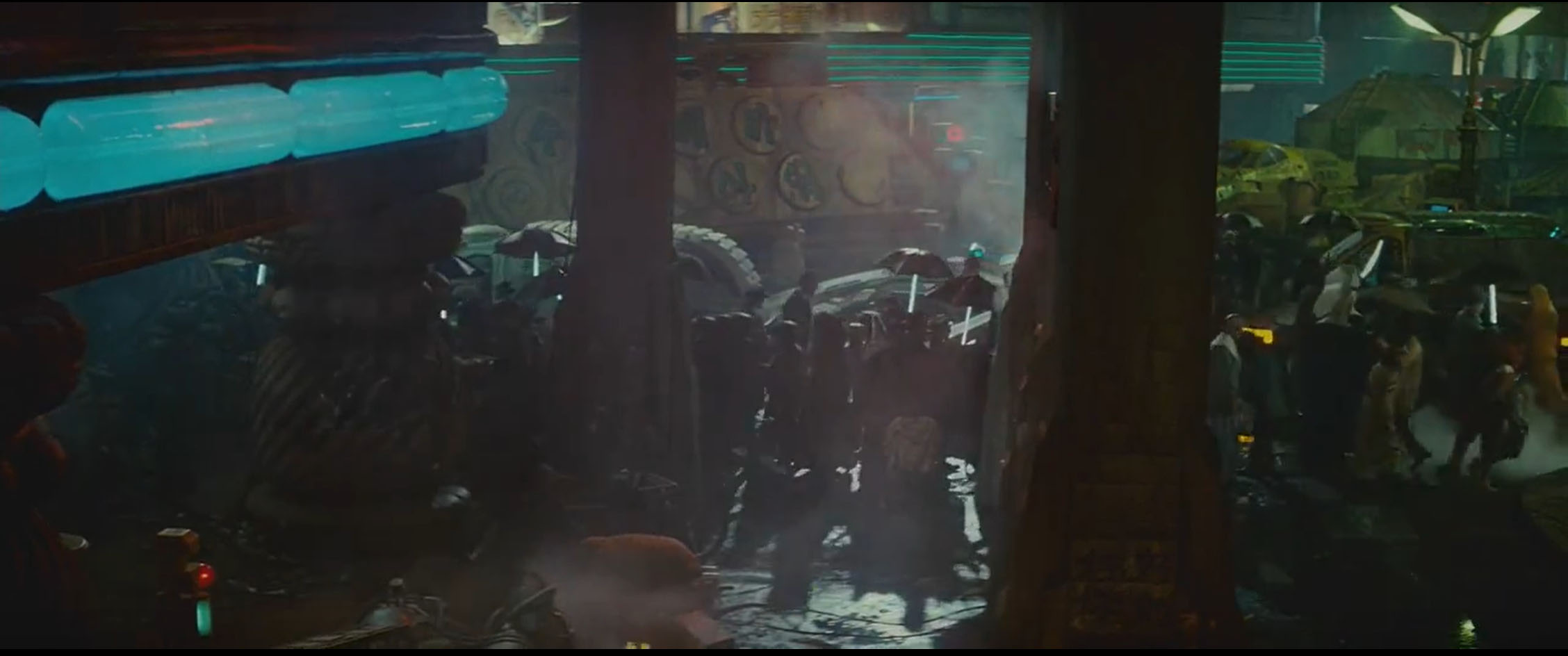
This again depicts the dark smoky, blue searchlight lit, streets of the film.

Deckard is caught by Leon, the first Replicant introduced, just after he kills the previous Replicant. Deckard is almost killed but is instead saved by Rachael who happened to be around. This goes to show that Replicants can distinguish good from evil. Deckard later falls in love with Rachael.

Roy later meets with Pris and uses Sebastian to meet the Replicant maker. He demands to increase his lifespan since Replicant only last 4 year. The Replicant maker denies the demand since the code is already set in play. Roy then kills his maker. This then again shows the villainous side of the Replicants.

Deckard later goes to Sebastian's house to kill the last Replicants: Pris and Roy. This scene in particular emphasizes the terror and ominous behavior that a bad Replicant can give off. The interior of the house is transform into something one would find in a haunted house.

After a brief chase from Roy, Deckard is actually saved by Roy. Roy then goes into a monologue into how his live was as well the the memories he had. This scene actually humanizes the villians of the film. The monster that was made was actually made through the slaver labor that the Replicants were put under in outer space.
Ridley Scott’s Blade Runner is a film that delves into the sci-fi future of Los Angeles in 2019. This film really leaves questions about how technology affects our lives. For instance, the world in which the film takes place is filled with technological advancements like flying cars, robotic animals, and even robotic people: Replicants. However, these Replicants are placed off the world to do work for humans. If these Replicants were to come to earth, they would be hunted and “retired” by a blade runner, Harrison Ford. The idea of allowing robots being treated the same as humans is thrown to the viewer to decide. The end of makes the viewer really decide who is the real villain and hero. Blade Runner really is a film that questions if humans have gone too far with technology in the sense of allowing tech to be considered human.
Blade Runner is also a very eerie, noir-like film that dives into a dark technologically advanced future. The streets of Los Angeles are dark, smoky, blue lit, and packed. There is always a sense of terror and eeriness throughout the film due to these key factors. This is then linked with the noir aspect of the film that is illustrated with the dark, rainy, and atmospheric aspect of the film. The blade runner is retired but is called again to hunt the 5 Replicants that came to Los Angeles. After some detective work, he goes to meet with the maker of these Replicants which makes him come in contact with one of the Replicants that is consistent throughout this film. However, this is the only Replicant that he does not kill but instead falls in love with. This happens after he reveals to her that the memories she had are not actually real but instead implanted in her. The blade runner feels bad for her and is later saved by her from the hands of another Replicant. This sparks the question if robots can actually be seen with human-like emotion. This film creates a continuous shift between showing the good and the bad as well as these Replicant figures. Still, the bad Replicants can still be seen as human due to the final chase scene that shows a monologue. This monologue shows that the Replicants can have feelings as humans, make memories, and are hurt with the idea of being slaves. Blade Runner is a film that utilizes a disturbing and eerie platform to talk about a topic that allows for debate.
5 Words: eerie, ambiguous, noir, terror, uncertainty
Thesis: The blade runner must take out 5 Replicants to fulfill his job; however, he is left questioning if what he is doing is really right.


Blade Runner test1 from UIC DESIGN on Vimeo.