

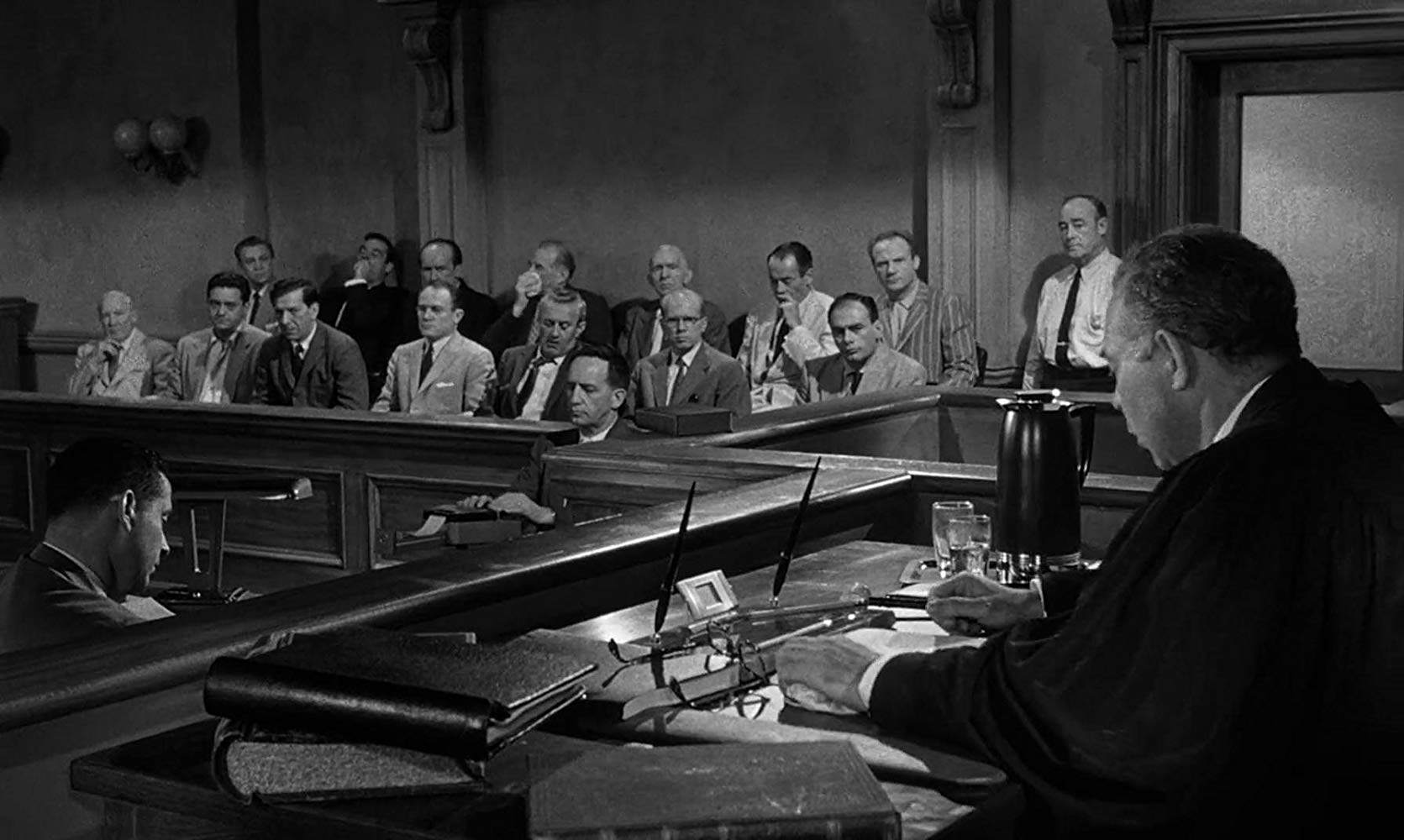
Starts in the courtroom. All men start out the same. Normal jury with no unique qualities.

Audience is introduced to the characters. All of them have unique personalities and stand out from each other.
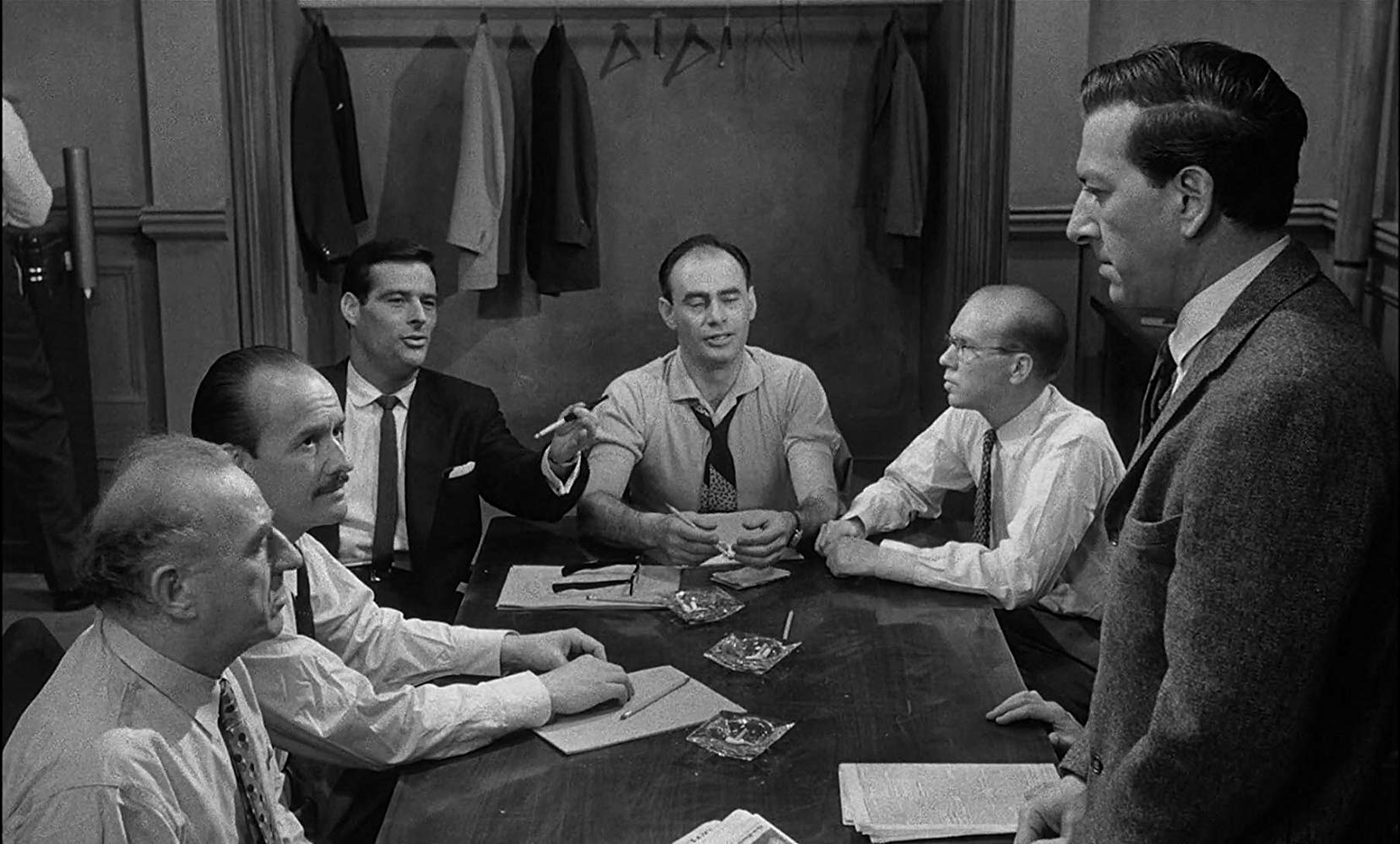
All the men go around the table and give their verdict of guilty or not guilty. Their personalities are shown more here. All but one person votes guilty.

Juror 8 defends his vote and gives reasons why. This is done alone until the others start to sway their original thoughts.

Although most are still voting guilty two clear sides are starting to form: those who vote guilty and those not guilty. And two major characters are behind those sides. The rest of the movie is essentially spent having each side arguing and and persuading the other party.

The biggest leaders for each side demonstrade how the stabbing for the murder took place. This is a visual representation of how high the tension is

This is the scene before juror 3 changes his vote. At this point he is completely alone to defend his side and is basically pulling at straws.

The final scene. The viewer is left to think about what happened. Juror eight leaves the courthouse alone and goes back to being anonymous mirroring the beginning.
The film begins in a New York City courthouse. The viewer is introduced to the case, an 18 year old boy who is being accused of murder the murder of his father. The bored judge then instructs the jury to vote on the boy being guilty or not-guilty. These selections being; non-guilty, if there is any reasonable guilt from the jury and guilty, a mandatory death sentence.
The scene then moves into the jury room. This is where the majority of the film takes place. The jury is introduced and all of them are different with individual personalities, this gives dynamic viewpoints throughout the film. When they all finally sit down and vote everyone votes guilty except one person, juror 8. This sparks the discussion of the discussion/argument of the boy's fate.
When juror 8 voted not-guilty, he had to defend his decision. A big portion of the film is the argument of the fate of the boy. The jurors go back and forth on evidence provided and also just their own prejudices. Everyone else voted guilty without putting much thought into it. Juror 8 brings everyone's attention to how quickly they were to come to a judgment and how much is really at stake. It doesn’t really matter if the boy was guilty or not, it matters if he’s given a fair trial.
They finally all come to the conclusion of not guilty. They all leave the room and the final shot is Juror 8 leaving the courthouse becoming just another number in a crowd. The film digs into morals and prejudices.
The argument of 12 jurors coming to deciding one boys fate, exploring the dynamic feelings, morals, prejudices, and opinions of the men.
Integrity, Division, Stigma, Contrast, Prejudice






4 and 8 from UIC DESIGN on Vimeo.
3and10 from UIC DESIGN on Vimeo.
production-companies-test from UIC DESIGN on Vimeo.