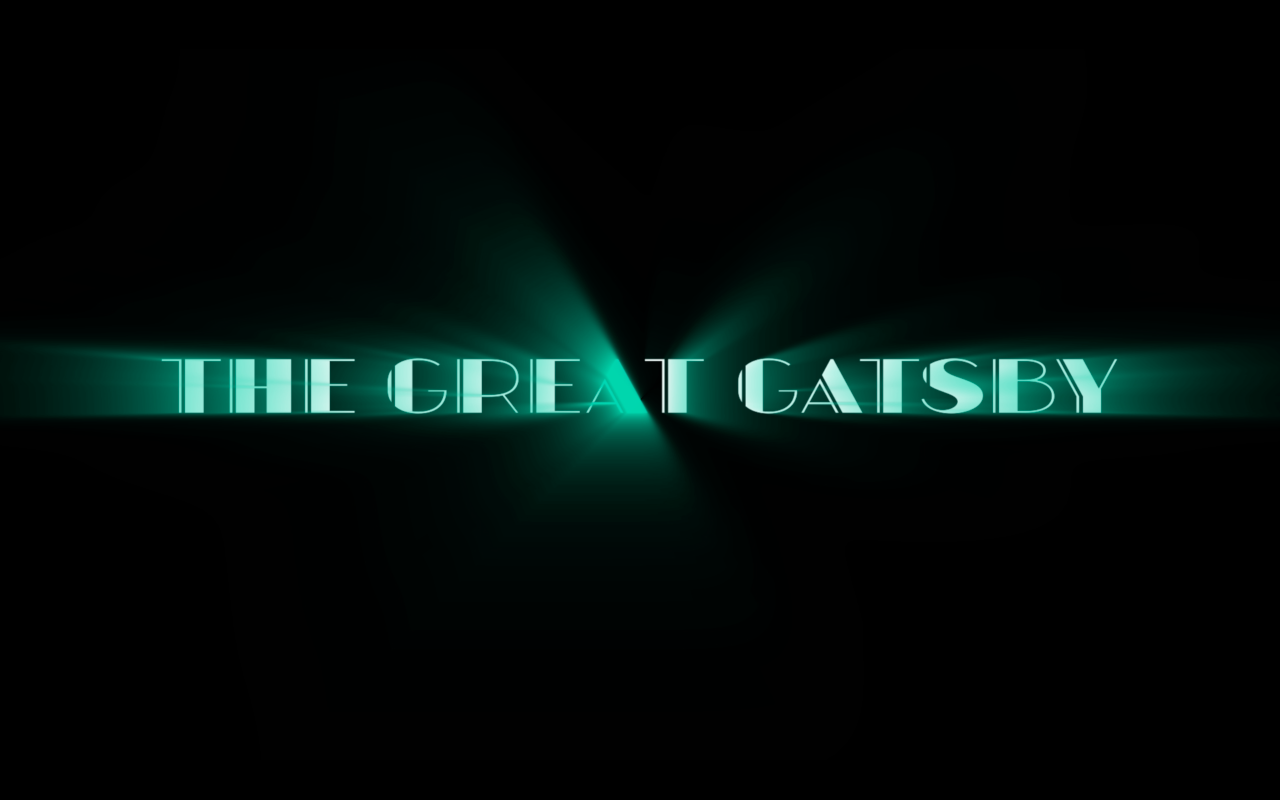
Opening scene shows a green light shining from across a lake. Screen is entirely dark except for the bright green color, showing contrast, emphasis on this glowing orb.
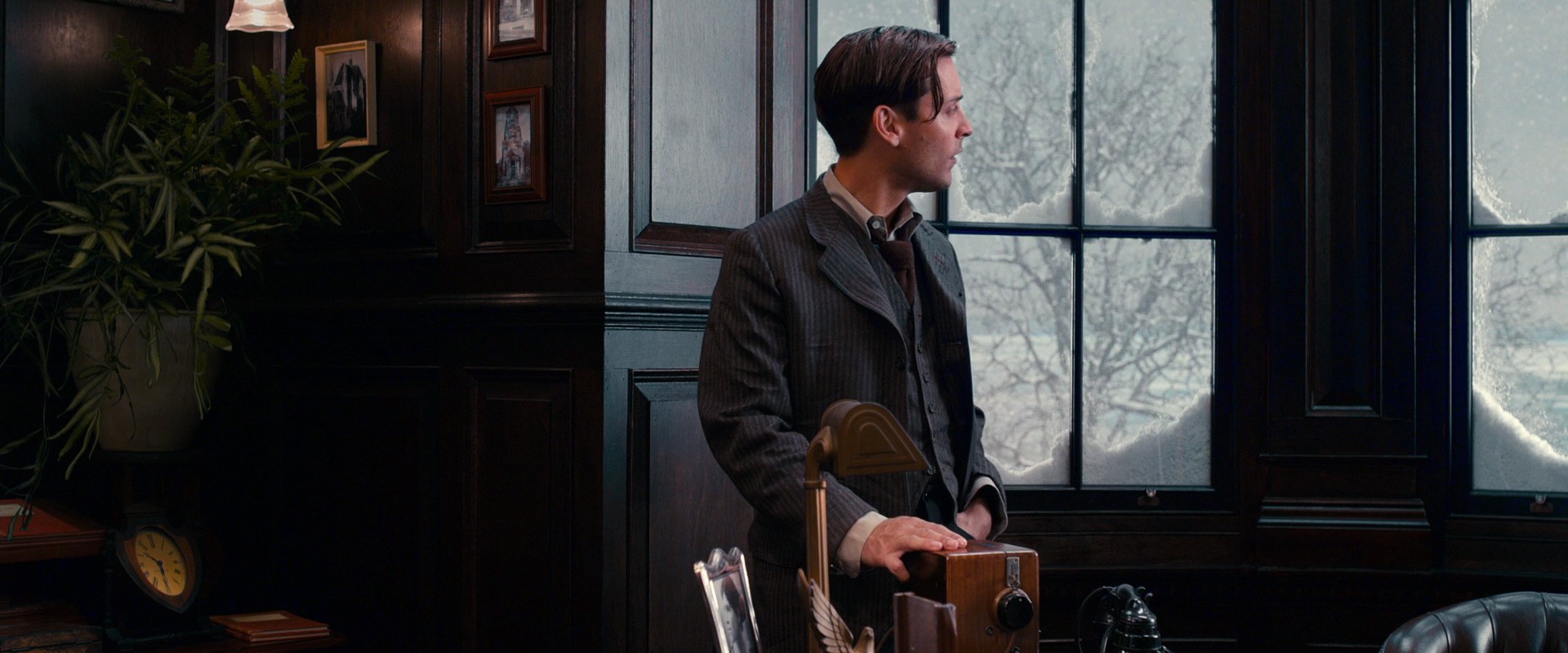
Introduced to the protagonist, Nick Carraway, who is recalling a time in his past when he moved to New York and met a man. The colors are cool and dreary, setting the mood to be one of sadness. Season is winter, associated with cold and the feeling of isolation.

View from Nick’s house in New York during the summer of 1922. Colors are warmer and more vibrant, contrast to the previous scene of the present time period. Emphasizes a happier time during Nick’s past experience in New York.

Nick’s first meeting with Daisy at her home in East Egg. Scene uses the color white to represent the lavish and free life style the Buchanans have. Also shows how well off they are and how Daisy may be associated with purity.

Scene from Gatsby’s extravagant house party. Fireworks, streamers, confetti are being used in the scene to show the overall grandeur of the parties Gatsby hosts at his home. Despite the scene being well lit and emphasized by the lights, the main color being used is blue. Overall use of cool colors again.

Gatsby’s first appearance and meeting with Nick at his party. No words needed. Just Leo.

Scene of New York during the 1920s. The city is bustling and well lit. Billboard signs and LED lights are strung up on every building. A great crowd of people are shown during the night as well, emphasizing the nightlife and partying of the 1920s.

Gatsby meeting Daisy for the first time in 5 years at Nick’s home. Flowers fill the entire room in the scene. The dominant color of these flowers appear to be pale yellows, greens, and white. Gatsby went through a lot of planning in how the place is set up for Daisy’s appearance. The tension between Gatsby and Daisy is apparent through the image.

Gatsby and Daisy enjoying themselves on the dock at Gatsby’s house after meeting one another again. The bright red umbrellas contrast with the blue of the sky and the lake that surrounds them. Use of vibrant color to make a scene pop and stand out. Suggests that the color of red is related to love.

Gatsby and Daisy hid in the trees out of his house during a party he was throwing. They are trying to keep their relationship on the down-low, away from Tom. The scene is taken during the nighttime. Daisy and Gatsby complement one another with their contrast in outfits (Daisy wearing silver/white, Gatsby black).
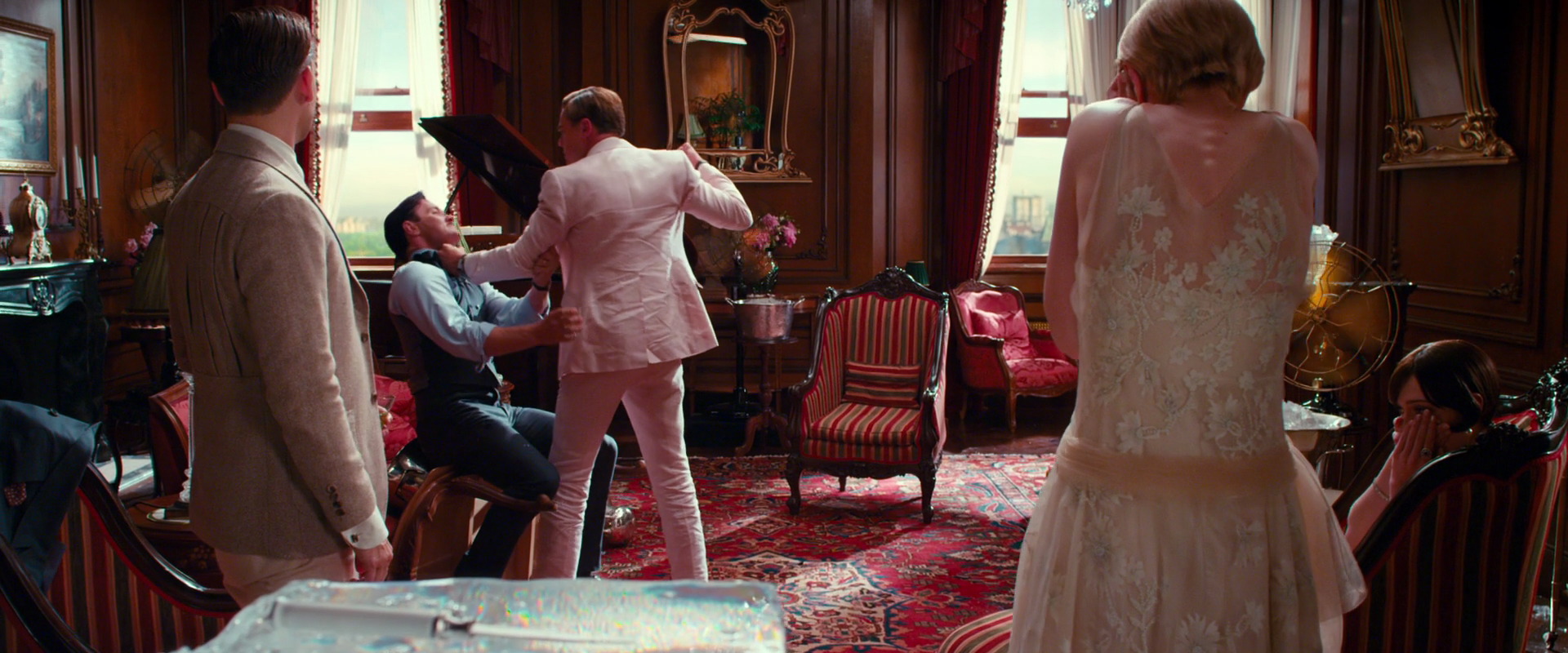
Gatsby holding himself back from punching Tom after he was ridiculed for coming from a poor family with nothing. Daisy has become colder and went against Gatsby’s love in confusion. The room is filled with red furniture while the actors are wearing white or lightly colored clothes. Gives an overall sense of tension and conflict in this case, rather than love and warmth.

Gatsby trying to take a hold of the wheel after Daisy ran over Myrtle, Tom’s mistress. The glass is shown broken on the windshield and Daisy appears to be visibly shaken after what she has done. Scene is dark and desaturated to highlight the murderous act that was just committed. Broken glass on the windshield can represent the start of Gatsby and Daisy’s inevitable downfall.
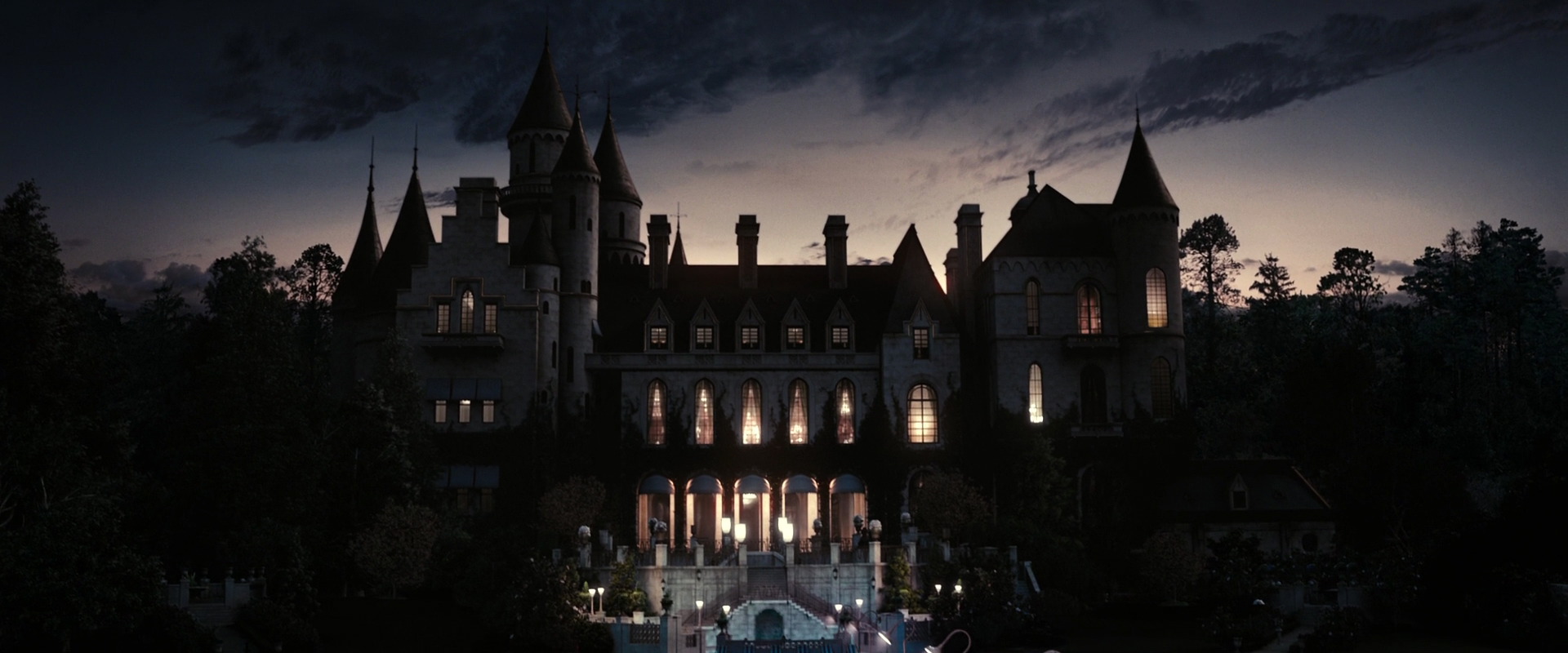
Outside of Gatsby’s mansion. The sun has just set and it creates an eerie and dark atmosphere as the house is illuminated with light. The silhouette of the house enforces the saddening shift in tone of the movie.
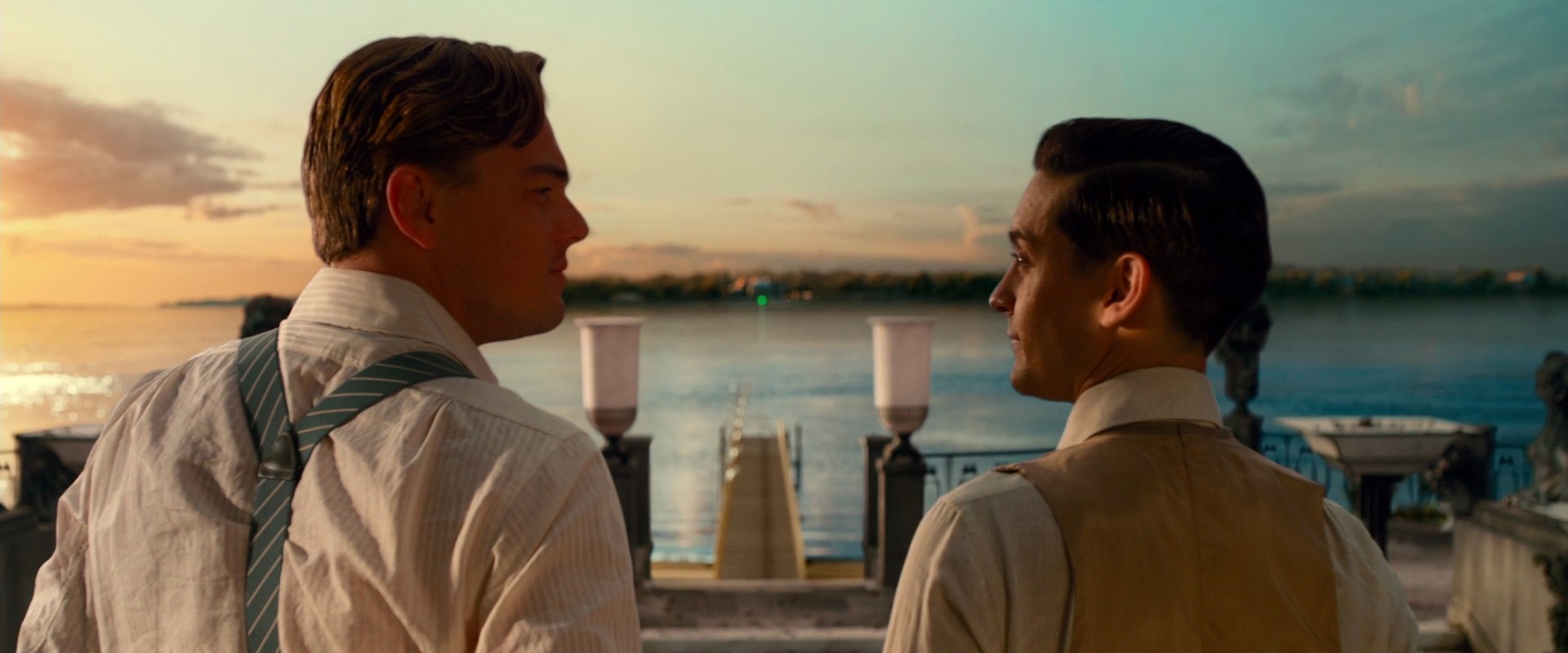
The sunrise the next morning as Gatsby and Nick stay up to wait for Daisy’s call. The scene is highlighted in warm colors to the left and cooler colors to the right. Can foreshadow whether or not something good or bad is coming for Gatsby’s situation.

Pivotal scene where Nick says his last words to Gatsby before leaving him to go to work. The use of shadows from the sunlight highlighting Gatsby’s face sets the mood of longing and bitterness before his tragedy.

Gatsby’s death as he fell into the pool he was swimming in after being shot by Myrtle’s husband. The words “hit and run” appear on the screen as reporters take pictures of him underwater. Gatsby’s floating body surrounded by the blue-green water of the pool emphasizes the tragedy he has faced from the public before and after his death.
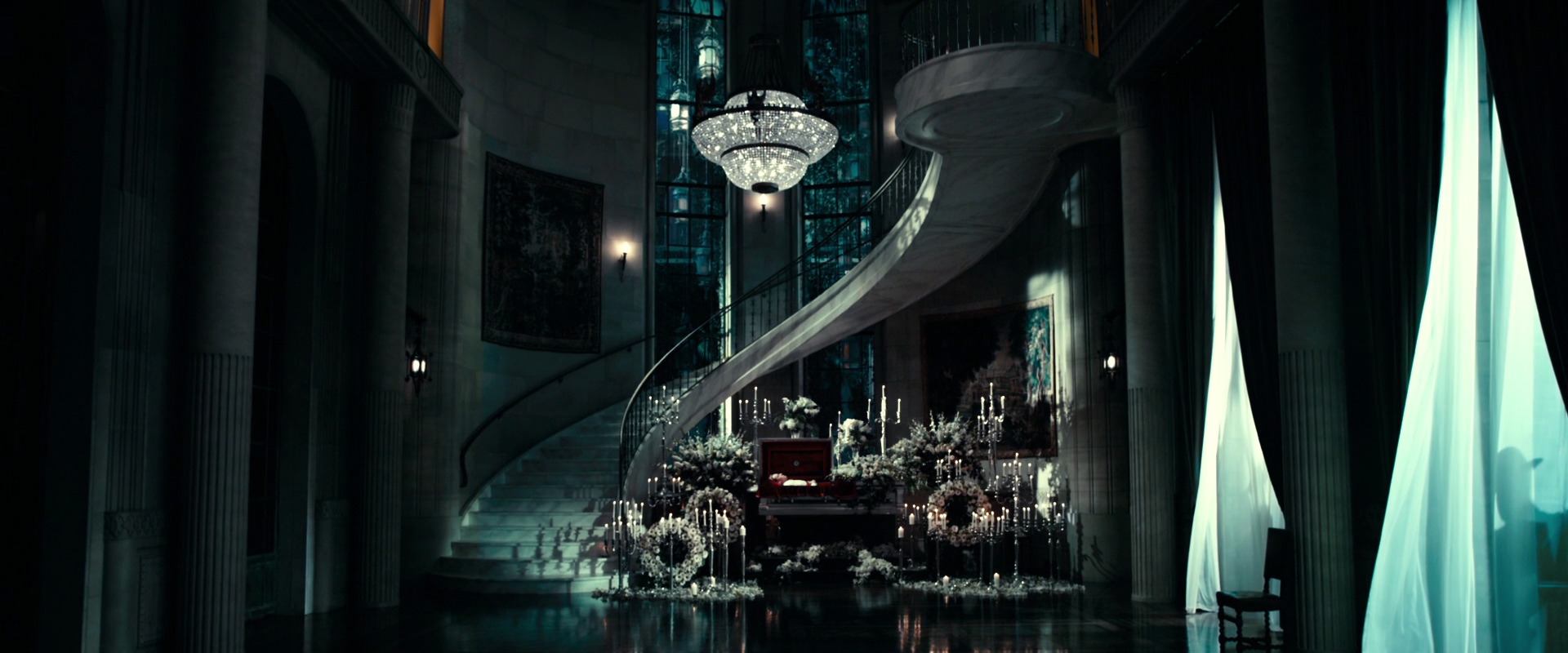
Scene in Gatsby’s house where his body lays in the casket. It is dark and gloomy, only slight light coming from the opened windows to the right. The drapes sway in the wind to emphasize the hollowness of the scene. Gives off the impression of coldness.
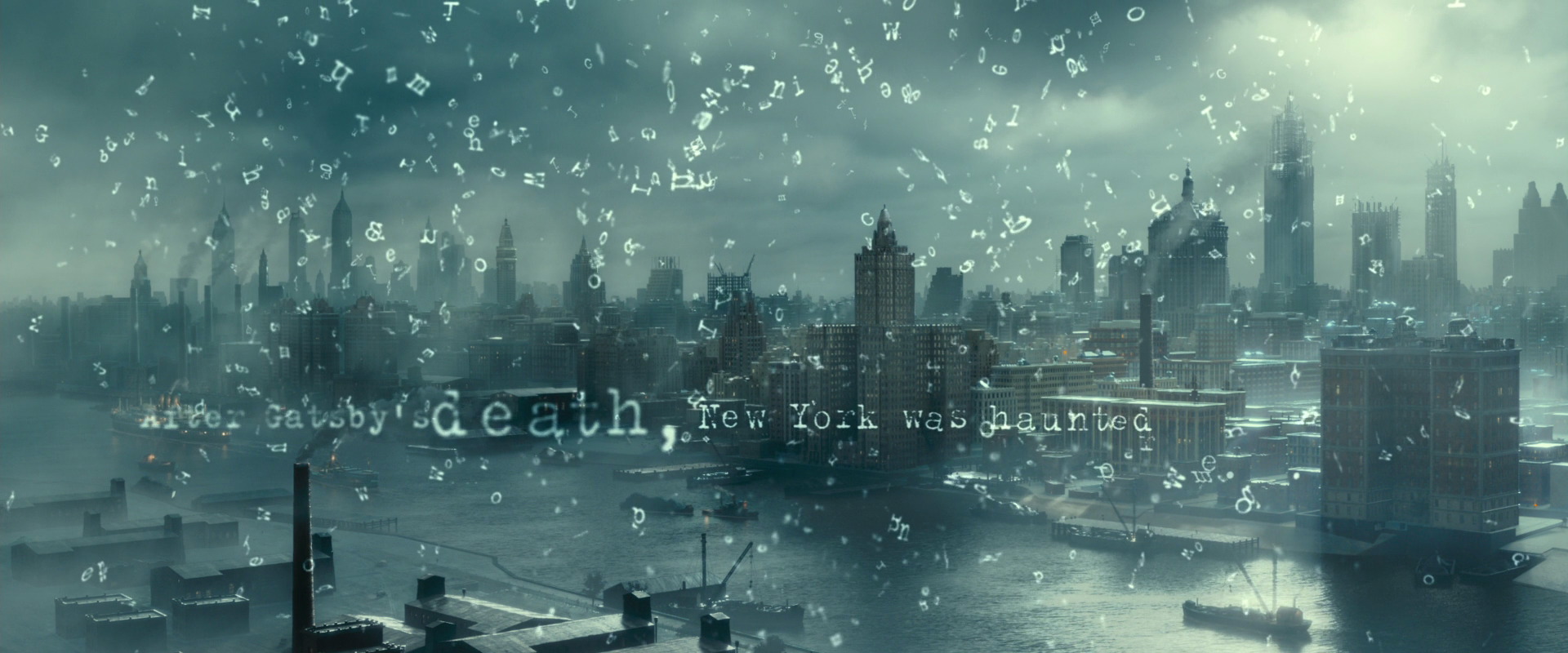
Picture of New York’s skyline during the wintertime as Nick recalls how the city has begun to feel cold to him after everything that has happened. The use of words floating around on the page literally represents the words Nick is writing in his story about Gatsby. Sad and cold vibes once again.

A vision Nick sees of Gatsby standing on his dock in front of the glowing green light at Daisy’s home. Gives the feeling that Gatsby is haunting Daisy even after death, as if he can’t seem to let go of her. The scene is filled with blue and green. Gatsby’s shadow adding contrast to the glowing light in front of him. Green and blue in the film represents corruption and tragedy.

Ending scene of Nick’s calling the story he has written “The Great Gatsby” as the green light flickers once more in the background.
The Great Gatsby follows the glamorous lives of wealthy inhabitants of the fictional towns West Egg and East Egg in Long Island, New York during the summer of 1922. The story is told by Nick Carraway, a man who has just moved from the Midwest to West Egg in order to learn about the bond business. The West Egg district is an area for the new rich, while East Egg district is for those from an established upper class. Nick travels over to East Egg one day to reconcile with his cousin Daisy, her husband Tom Buchanan, and their friend Jordan Baker. The Buchanans and Jordan live rich and lavish lives, a contrast to Nick’s more modest lifestyle. Nick has soon noticed after moving in that he has a mysterious neighbor, Jay Gatsby, a man who lives in a Gothic-styled mansion and throws extravagant parties. Through his growing relationship with the Buchanan’s, Nick soon finds out from Jordan of Tom’s secret lover who lives in the valley of ashes (an industrial dumping ground between West Egg and NYC).
The summer progresses and Nick has been personally invited to attend one of Gatsby’s parties. He officially meets Gatsby for the first time and later learns from Jordan that Gatsby has told her about his past romantic relationship with Daisy in 1917. Gatsby is still very much in love with Daisy and always watches the green light at the end of her dock from across the lake that divides his home from hers longingly. As Nick and Gatsby become closer, Gatsby asks Nick to help arrange a meeting with Daisy. Upon meeting for the first time in 5 years, Daisy and Gatsby immediately rekindle the love they had for one another and start an affair. Tom grows increasingly suspicious of the two’s relationship and realizes that Gatsby loves Daisy during a luncheon they all had together. Tensions arose when Tom brought up Gatsby’s illegal activities to earn his current riches and sends off Daisy with Gatsby to return to East Egg.
Mentally unstable while driving, Daisy runs over Myrtle—Tom’s secret lover—and kills her using Gatsby’s yellow car. Upon finding out the news, Tom tells Myrtle’s husband that Gatsby was the one who killed her and convinces Daisy later that night to leave Long Island for good in hopes of a new beginning. The next day, Gatsby was out waiting for Daisy’s call when Myrtle’s husband shot Gatsby dead in his pool. The public blames Gatsby for Myrtle’s death and no one attends his funeral except for Nick. The movie ends with Nick finishing the novel he was writing about on that summer of 1922.
Fantasy, Wealth/Class, Deceit, Tragedy, Greed
The Great Gatsby touches on the roaring 1920s as an era of corrupted social and moral values due to an unrestrained desire for money and pleasure.